Sacsayhuamán: the stones that survived the conquest because they were too big to steal
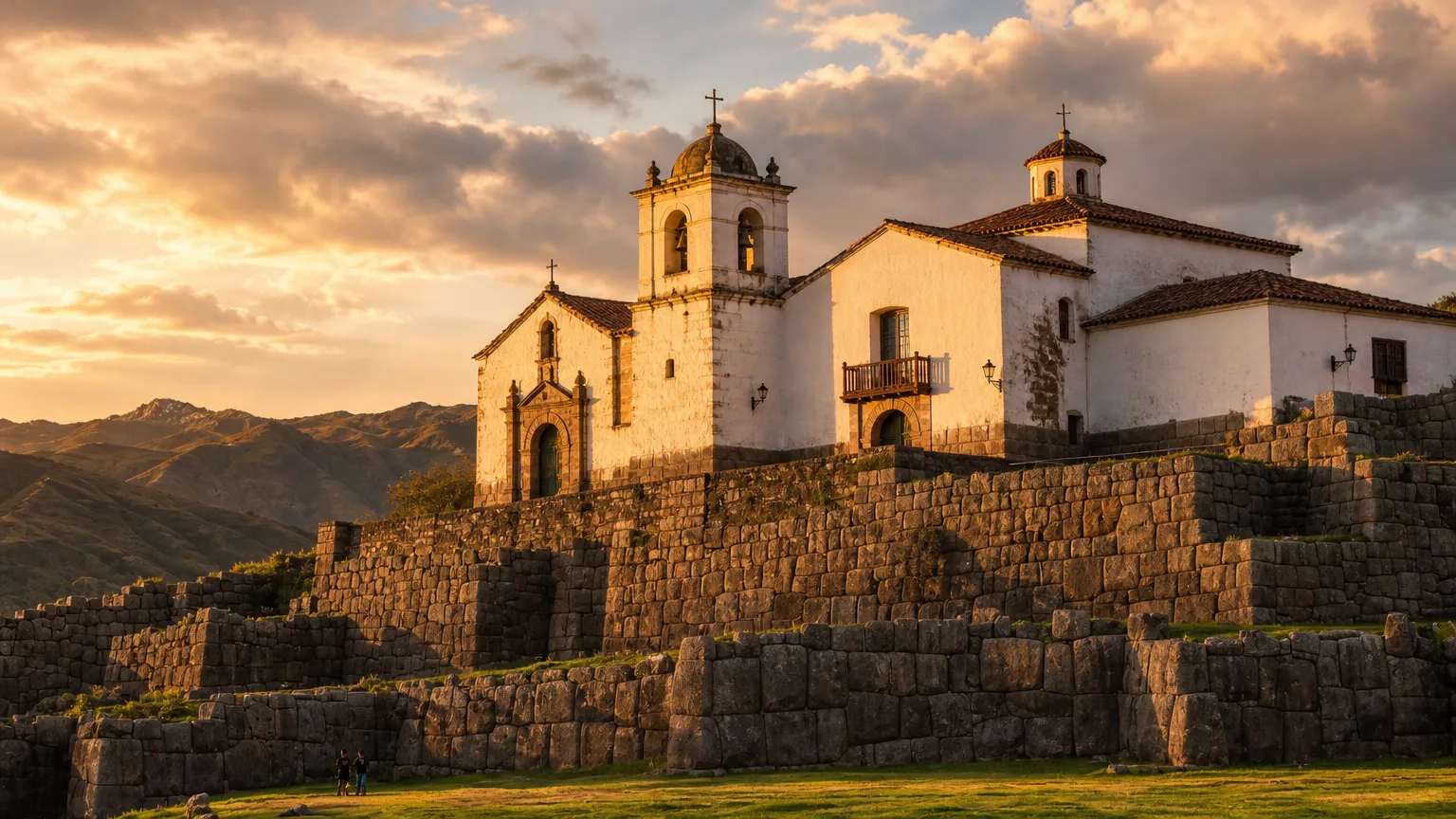
The walls that the 1950 earthquake could not bring down are the same ones the conquistadors could not carry off. The rest became churches and palaces in Cusco.
- When
- c. 1438
- Where
- Sacsayhuamán, Cusco, Peru
- Status
- Partly explained the main explanation is accepted; details remain open
By The Echoes of the Past team. Published November 2, 2026. 4 min read.
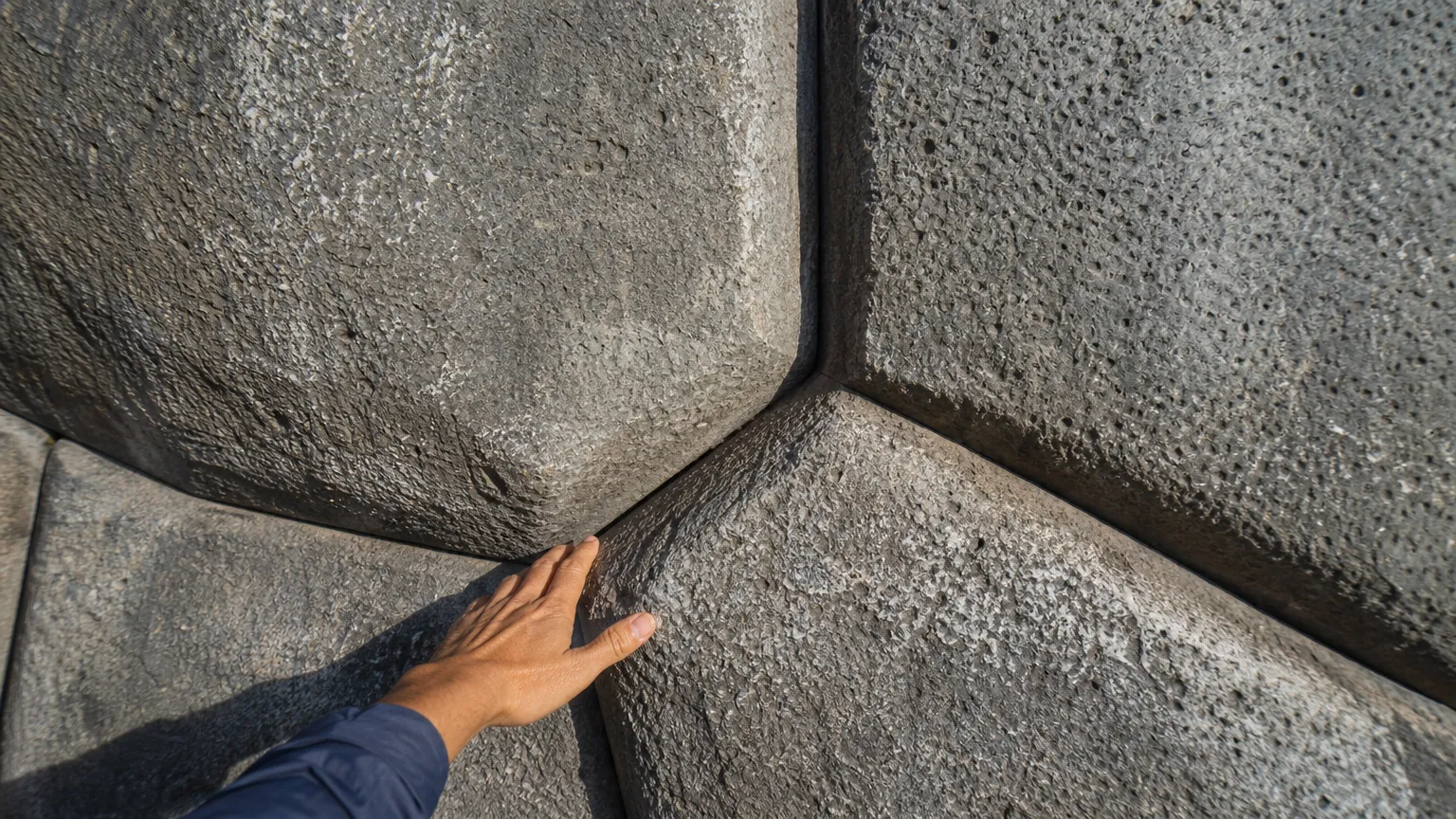
There is a simple test any visitor to Sacsayhuamán can try.
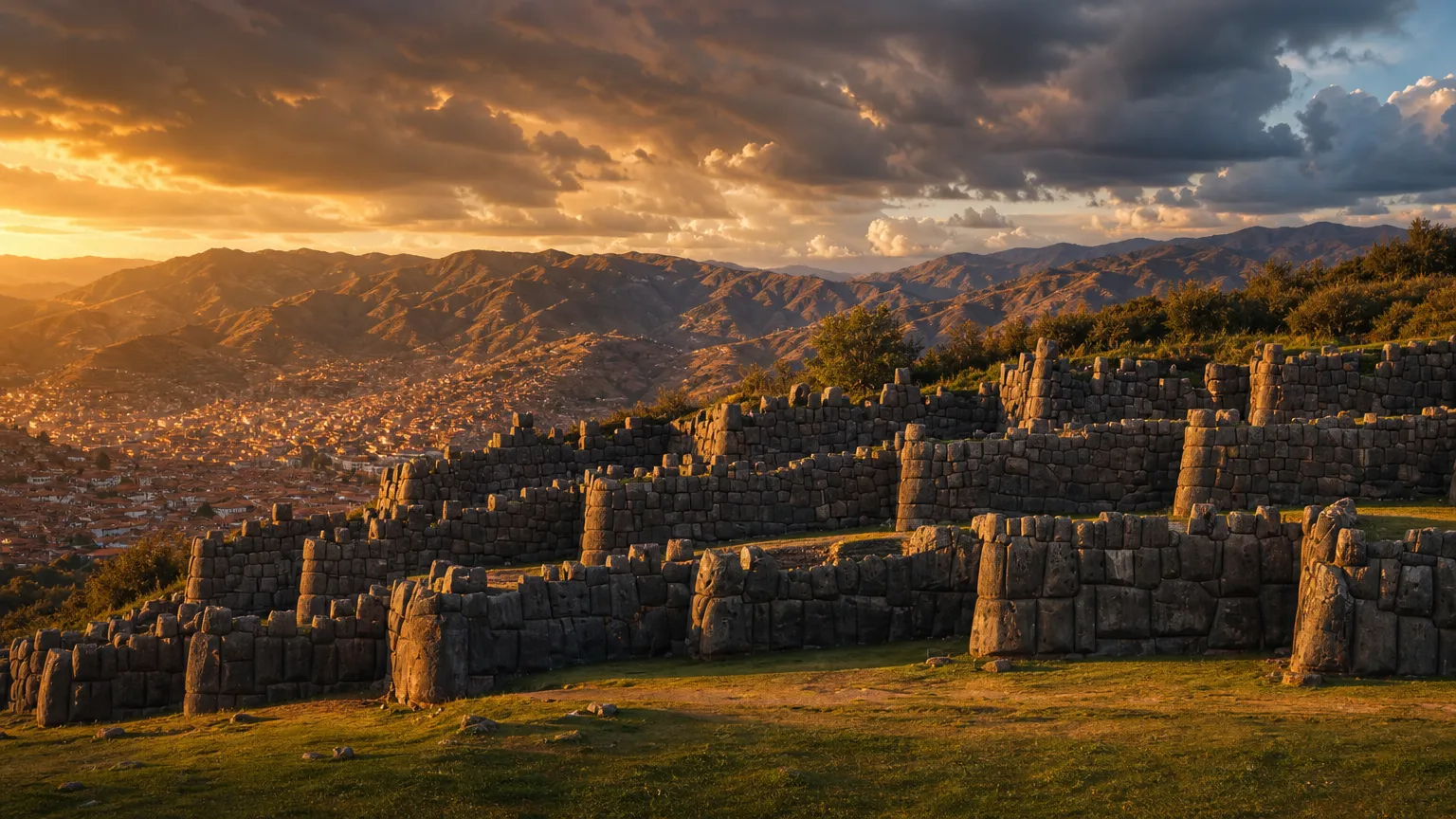
Take a sheet of paper. Try to slide it into any of the joints between the stone blocks of the wall. In almost no spot will you manage it. The blocks, some with estimated weights of up to 300 tons, cut into irregular polygonal shapes that fit together like pieces of a three-dimensional puzzle, were set with a precision no sheet of paper can get through.
The Incas had no wheel. They had no iron. They had no draft animals capable of moving hundreds of tons.
And they did it anyway.
The fortress that stayed standing
Sacsayhuamán stands about two kilometers from the historic center of Cusco, Peru, at an altitude of 3,700 meters. It consists of three zigzagging walls on ascending terraces, more than 360 meters long. The largest blocks, at the base of the walls, are up to 8.5 meters tall, with estimated weights of 100 to 300 tons.
Construction was begun by the Inca ruler Pachacuti around AD 1438. Sixteenth-century Spanish chroniclers estimated 20,000 to 30,000 workers over several decades. The main limestone quarry is 3 kilometers away. The andesite quarry, more than 30 kilometers.
In 1950, a devastating earthquake struck Cusco. Part of the Spanish colonial buildings, many of them built with stones the conquistadors had torn from Sacsayhuamán, collapsed. The walls of Sacsayhuamán were left intact.
It was no accident. According to the most widespread explanation, Inca polygonal masonry was designed to withstand earthquakes: the blocks shift slightly and settle back into place, absorbing the energy instead of cracking. The Inca builders had no seismology, but they had millennia of experience in the Andes.
The fit that has not been fully explained
Each block at Sacsayhuamán is carved into a unique polygonal shape that locks into the neighboring stones in three dimensions. A single block can have twelve different faces, each one matching a face of the block beside it.
That requires the blocks to be carved in reference to one another: you cannot make block B without knowing the final shape of block A. The process implies constant measurement and rigorous control.
Architect Jean-Pierre Protzen, of UC Berkeley, showed that the surfaces can be achieved with tools of harder stone and patience. The debate is not about whether it was technically possible: it was. It is about how that precision was maintained in 300-ton blocks, one after another, by workers who had no modern measuring instruments.
The "how exactly" still has gaps. And those gaps are what keep Sacsayhuamán fascinating.
What was destroyed, and why it matters
What we see today is only 20% of the original structure.
When the Spanish conquistadors arrived in the 16th century, Sacsayhuamán was complete, with towers, internal structures and covered courtyards. In the following decades, it became a quarry. The smaller blocks were hauled away to build the colonial churches and palaces of Cusco.
The blocks that remain are the ones the colonizers simply could not move. Ironically, we were left with the most impressive part: the foundations and base walls, made from the largest and most precisely fitted blocks. The easiest part to build was the part that was stolen. It is the same irony that preserved Nan Madol, in Micronesia: the city built on the ocean survived centuries of abandonment precisely because no one could get there to take it apart.
The technical knowledge of the Inca builders (the specific methods, the measuring systems, the fitting processes) disappeared with the master builders. The conquest did not destroy only stone. It destroyed knowledge.
What science establishes today
The prevailing position among Andean archaeologists: Sacsayhuamán was built by the Incas using empirical techniques developed over centuries. There is no evidence of undocumented technology or of an alternative origin. The tools found are made of stone, bone and wood. The Spanish chroniclers describe the construction process. It is the same thing archaeology says about Göbekli Tepe and about the Great Pyramid of Giza: in every case, what seems impossible has a human explanation. Incomplete, but human.
What science has not yet done: reproduce the process at scale, demonstrating in full how 300-ton blocks were moved across high-altitude Andean terrain and set with that precision.
The technical demonstration exists for small blocks. Scaling it up to 300 tons remains a challenge not yet fully solved in the lab.
Sacsayhuamán is inseparable from the wider Andean context. Read also about the Nazca Lines, another Andean enigma that only makes sense from an impossible vantage point, and about Göbekli Tepe, where hunters without agriculture raised 20-ton pillars. For the collapse of another civilization whose secrets were lost, see Easter Island.