Göbekli Tepe: the temple built 7,000 years before the pyramids, by hunters without farming
Pillars up to 5.5 meters tall, carved with animals and raised by hunter-gatherers millennia before writing and the first city.
- When
- c. 9500–8000 BC
- Where
- Göbekli Tepe, Şanlıurfa, Turkey
- Status
- Partly explained the main explanation is accepted; details remain open
By The Echoes of the Past team. Published November 2, 2026. 4 min read.
For decades, archaeology textbooks taught that the sequence was clear: first humans learned to grow food, then they formed permanent settlements, then they built temples and monuments.
Agriculture came first. Complex social organization came next. Temples came last.
In 1994, a site in southeastern Turkey turned that sequence completely on its head, and science is still recalibrating what that reversal means.
The hill that hid 12,000 years
In Turkish, Göbekli Tepe means "potbelly hill," a prosaic description for what turned out to be the oldest known monumental temple built by humans.
The site was first noticed in 1963, during a Turkish-American archaeological survey. At the time, researchers saw a hill strewn with stones and concluded it was an abandoned medieval cemetery. The stones were cataloged and the site was ignored for three decades.
In 1994, the German archaeologist Klaus Schmidt, of the German Archaeological Institute, revisited the site. Schmidt was a specialist in Neolithic sites, and something in the original report bothered him. When he began to dig, what he found had no precedent anywhere in world archaeology.
What lies inside the hill
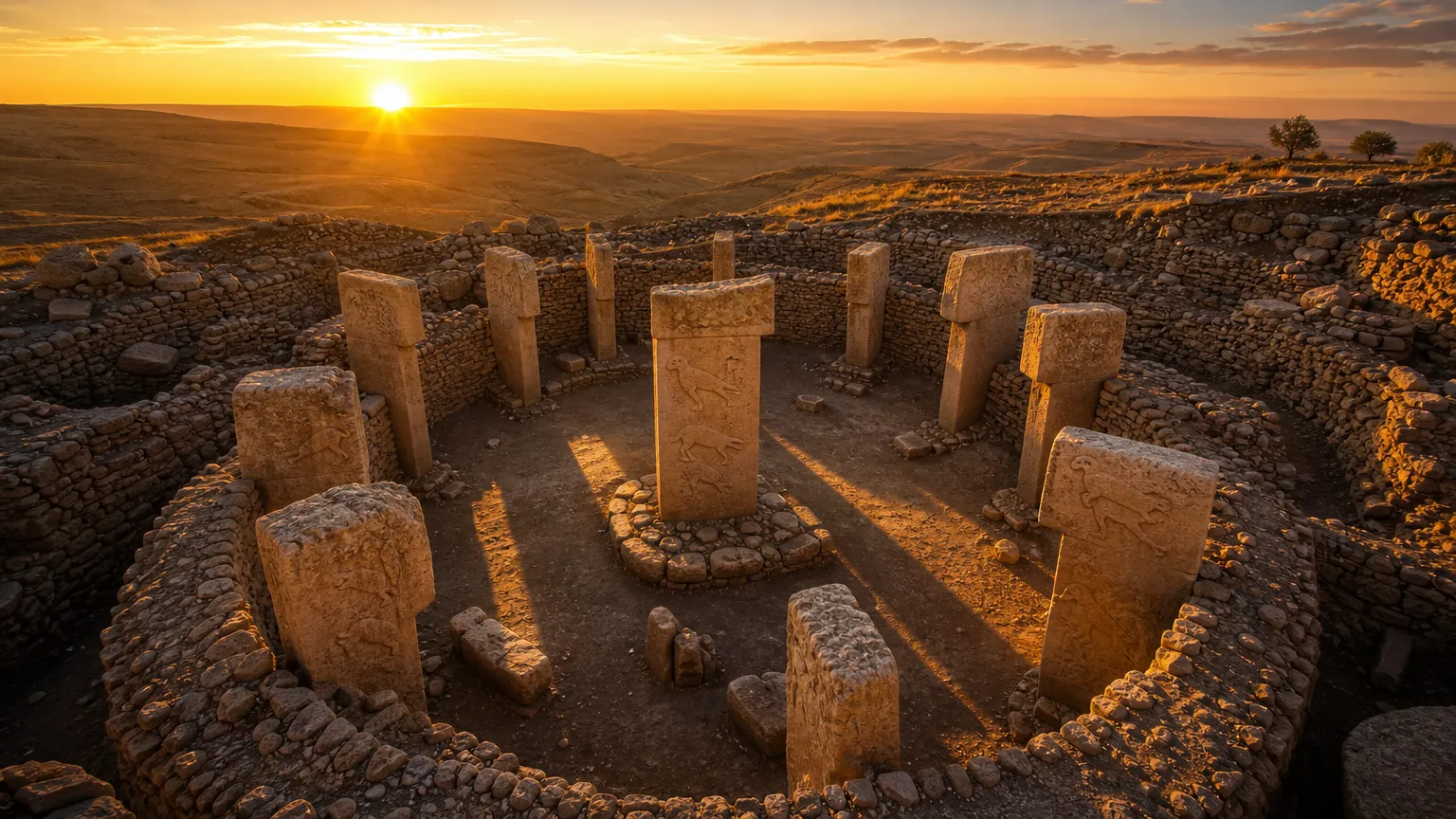
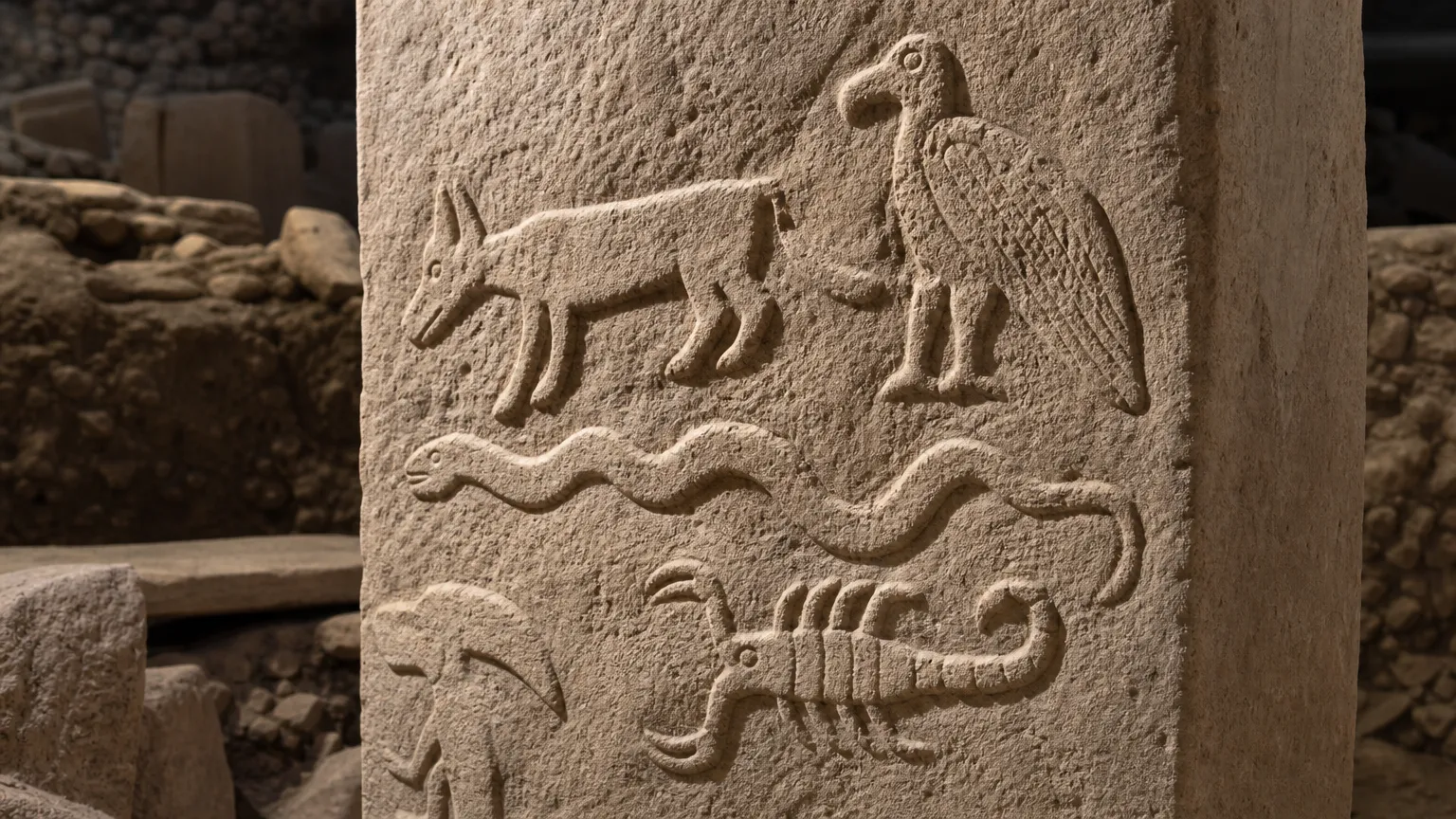
Below the surface, arranged in concentric circles, stood huge T-shaped limestone pillars, up to 5.5 meters tall and weighing between 10 and 20 tons each. The pillars were decorated with figures in high relief: snakes, foxes, boars, cranes, vultures, scorpions, carved with a technical realism that would be impressive in any historical period.
The central pillars of each circle had carved arms, hands and belts, suggesting stylized human or divine figures.
The dating is what turned archaeology upside down: the deepest layers date to roughly 11,500 to 10,000 years ago. That is more than 6,000 years before the pyramids. More than 7,000 years before Stonehenge. Older than writing, older than bronze, older than any known city.
And the devastating question for earlier archaeological models: who built this?
The impossible builders
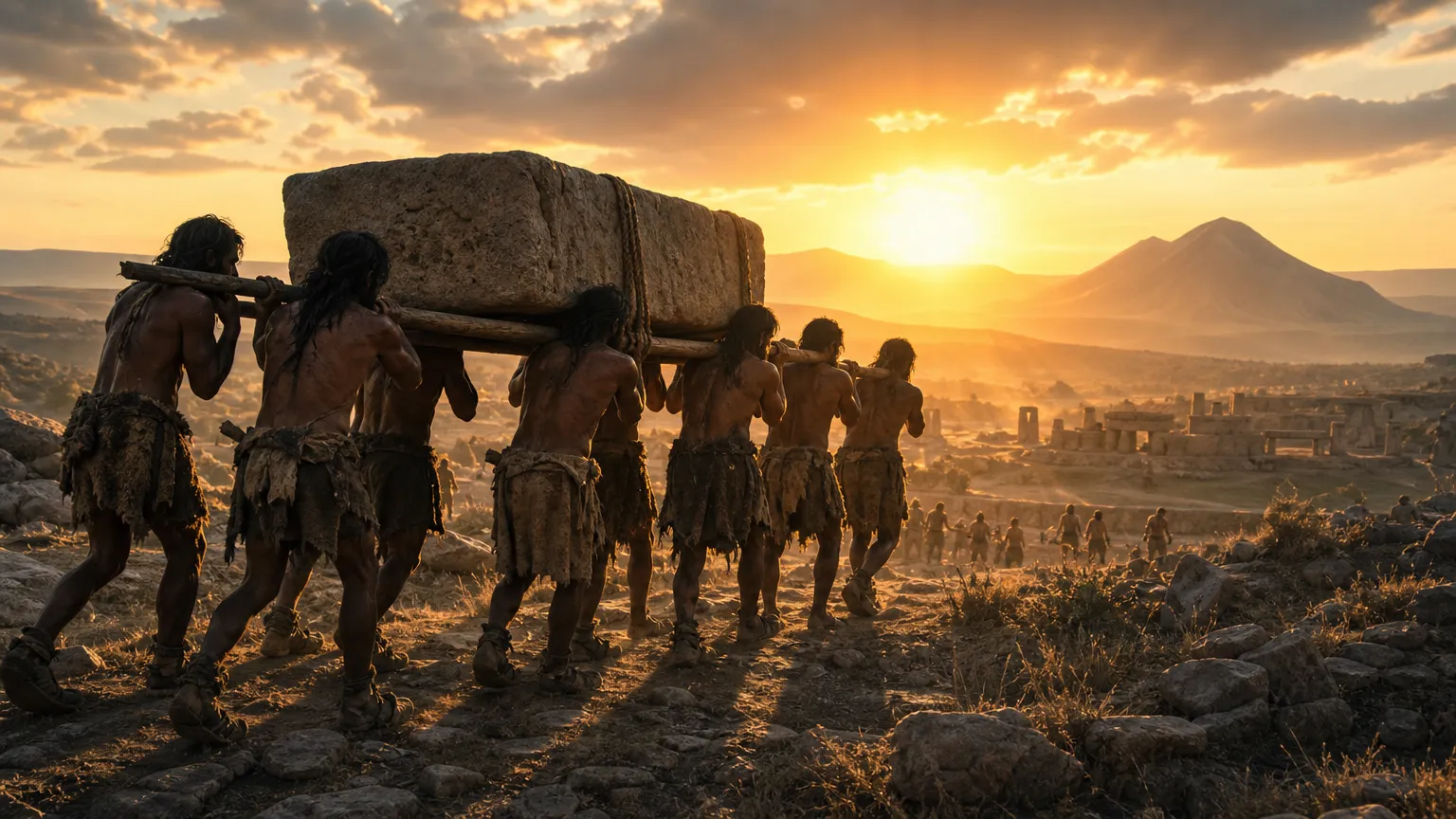
The answer, confirmed by analysis of the food remains found at the site, is: hunter-gatherers. There were no farms around the site. There were no permanent houses. The people who carved and raised these pillars did not grow grain or raise livestock.
That overturns a model accepted for decades. The ability to organize labor on a large scale (moving 20-ton stones, carving them with precision, placing them in deliberate arrangements) was considered the privilege of farming societies with a food surplus. Göbekli Tepe shows that this is not true.
Before his death in 2014, Klaus Schmidt proposed a hypothesis that has steadily gained ground: perhaps agriculture did not come first. Perhaps the temple came first, and the need to feed the workers who built and visited Göbekli Tepe was what drove the development of agriculture in the region.
"The temple created the city," Schmidt said in one of his last interviews. Anatolia is, perhaps not by coincidence, one of the regions identified as a cradle of Neolithic agriculture.
The deliberate burial and the undeciphered symbols
One of the most extraordinary features of Göbekli Tepe is that, after each circle had been in use for some time, its builders deliberately buried it with stones, bones and soil, and then built new circles on top.
Analysis of the sediment layers confirms that the burial was intentional. Why? Hypotheses include rituals of cyclical renewal, the close of ceremonial cycles or intentional preservation. The burial unintentionally created a time capsule: the oldest pillars, in the deepest layers, are the best preserved.
What's more, less than 5% of the site has been excavated. Estimates indicate there are at least 20 circles of pillars still untouched beneath the surface.
Among the animals carved on the pillars there are also abstract geometric symbols: H shapes, marks that fit no known artistic convention of the period. A study published in the journal Mediterranean Archaeology and Archaeometry in 2017 suggested that some arrangements of symbols could correspond to celestial events visible at the time of construction. The hypothesis is controversial. But it raises the question: did the builders of Göbekli Tepe have systematic knowledge of the night sky?
What Göbekli Tepe changed, and what remains open
What most archaeologists already accept: groups of hunter-gatherers could coordinate enough effort to move and carve stones weighing tens of tons, an ability that Sacsayhuamán, in Peru, displays even more startlingly millennia later, with blocks of up to 300 tons. Organized religious life may be much older than earlier models suggested. The sequence of human development was more varied and less linear than the textbooks taught.
What we still don't know: what exactly were those circles for? Who were the beings depicted on the pillars? What did the rituals performed there mean?
In three decades of systematic excavation, less than 5% of the site has been explored. What lies beneath the surface still outweighs what has been revealed.
And what has been revealed was enough to rewrite the textbooks.
Göbekli Tepe is just one of the places where official history runs into evidence that challenges it. Also read about Queimada Grande Island, a mystery on Brazilian soil, and about the sunken city of Dwarka, which Hindu texts described millennia before any archaeologist. For a historical figure as out of place in time as Göbekli Tepe, see the Count of Saint-Germain.