Queimada Grande Island: the "most dangerous island in the world" is in Brazil, and almost no one can visit it
A snake that lives nowhere else, a lighthouse that runs on its own and the legend of a keeper: what is documented and what was never confirmed.
- When
- c. 9000 BC to the present
- Where
- Queimada Grande Island, São Paulo coast, Brazil
- Status
- Partly explained the main explanation is accepted; details remain open
By The Echoes of the Past team. Published November 2, 2026. 6 min read.
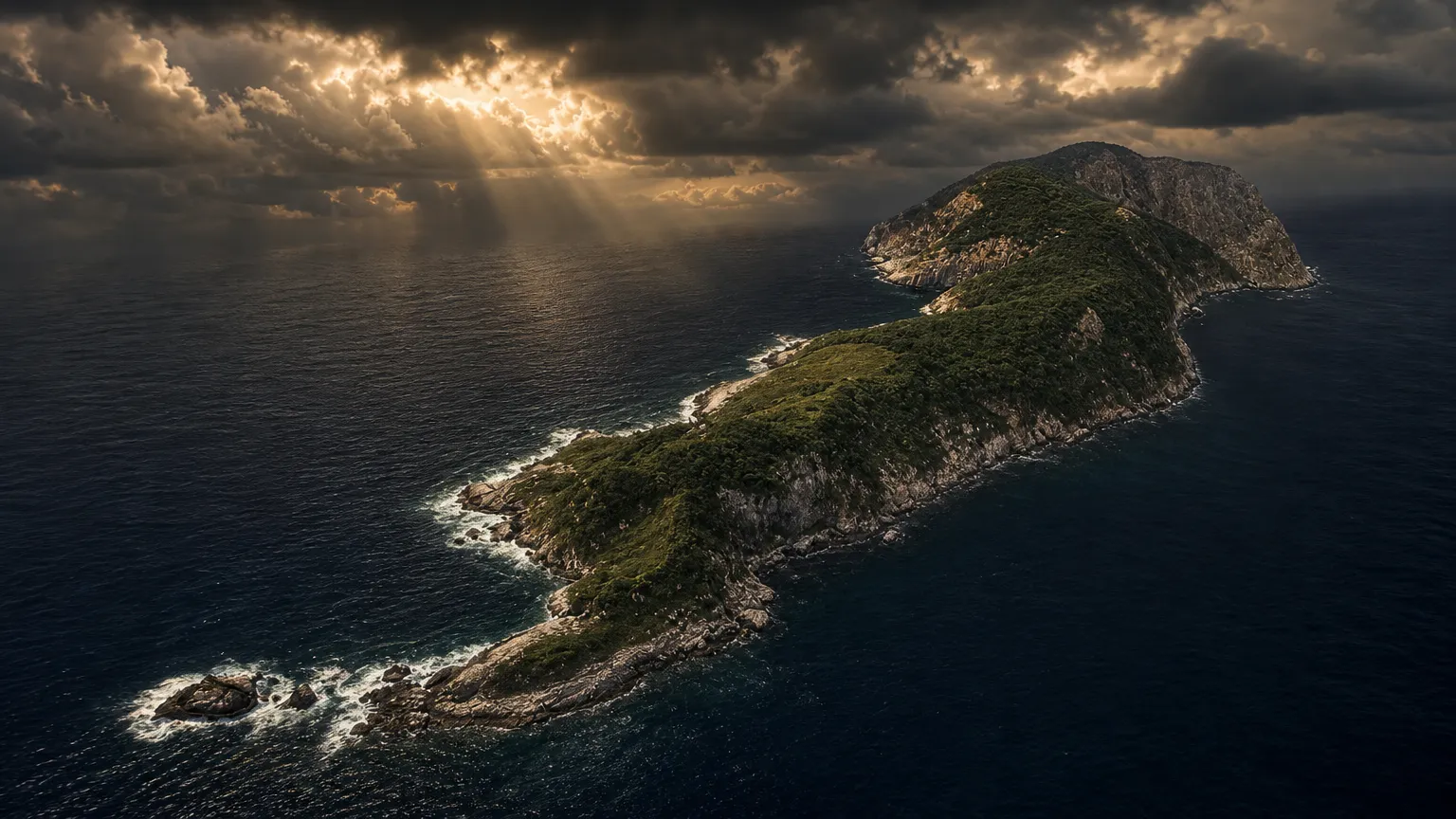
Thirty-five kilometers off the coast of São Paulo, visible on clear days from the shore at Itanhaém, there is an island the Brazilian government forbids you to visit.
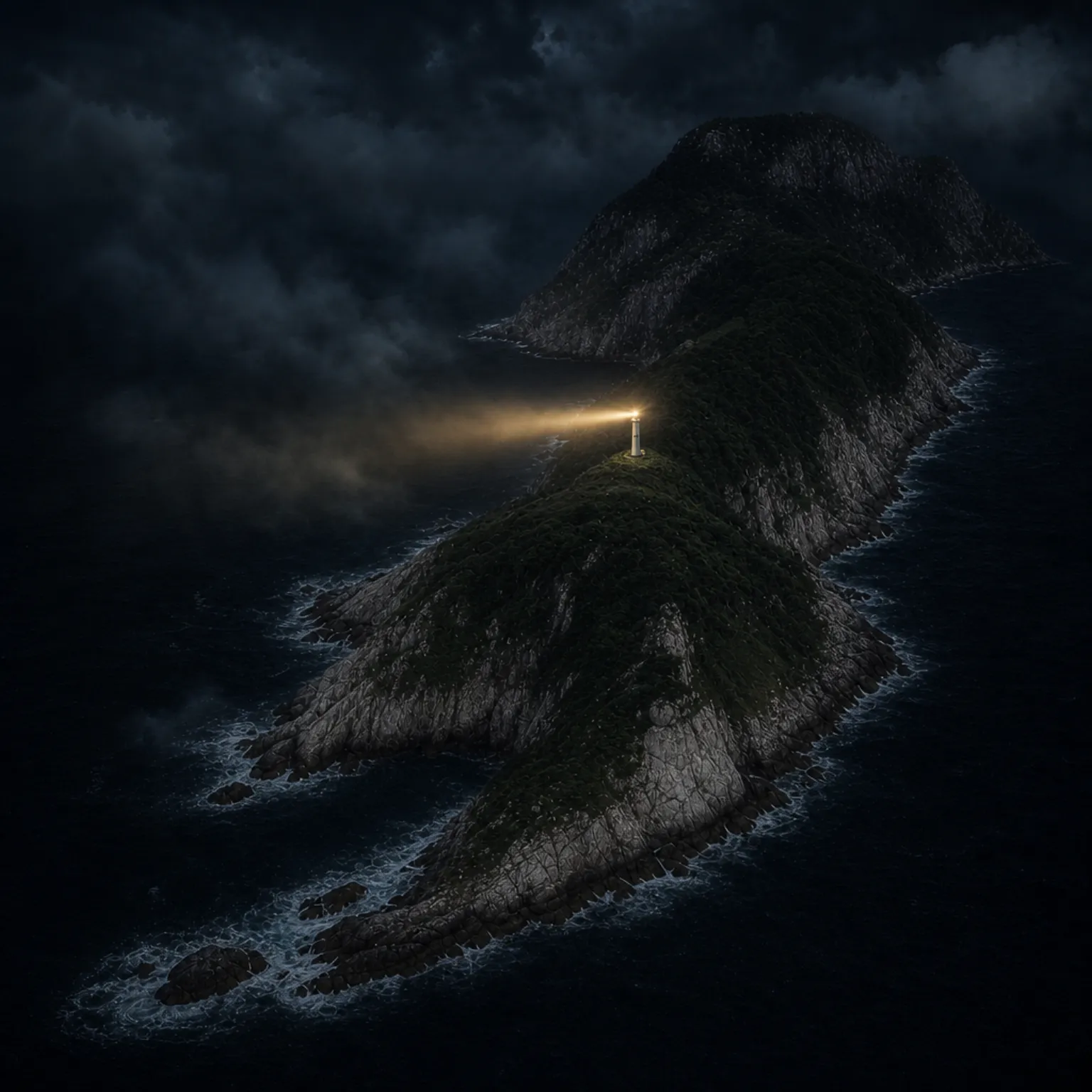
It is not a state secret. It is not a military base. It is a 430,000-square-meter island covered in Atlantic Forest, with a lighthouse built in 1909 and automated in 1985, and with one of the highest concentrations of venomous snakes per square meter on the planet.
Its official name is Ilha da Queimada Grande. The world knows it as Snake Island. And the stories told about it mix documented fact and legend so thoroughly that separating the two takes care.
The snake that lives only here
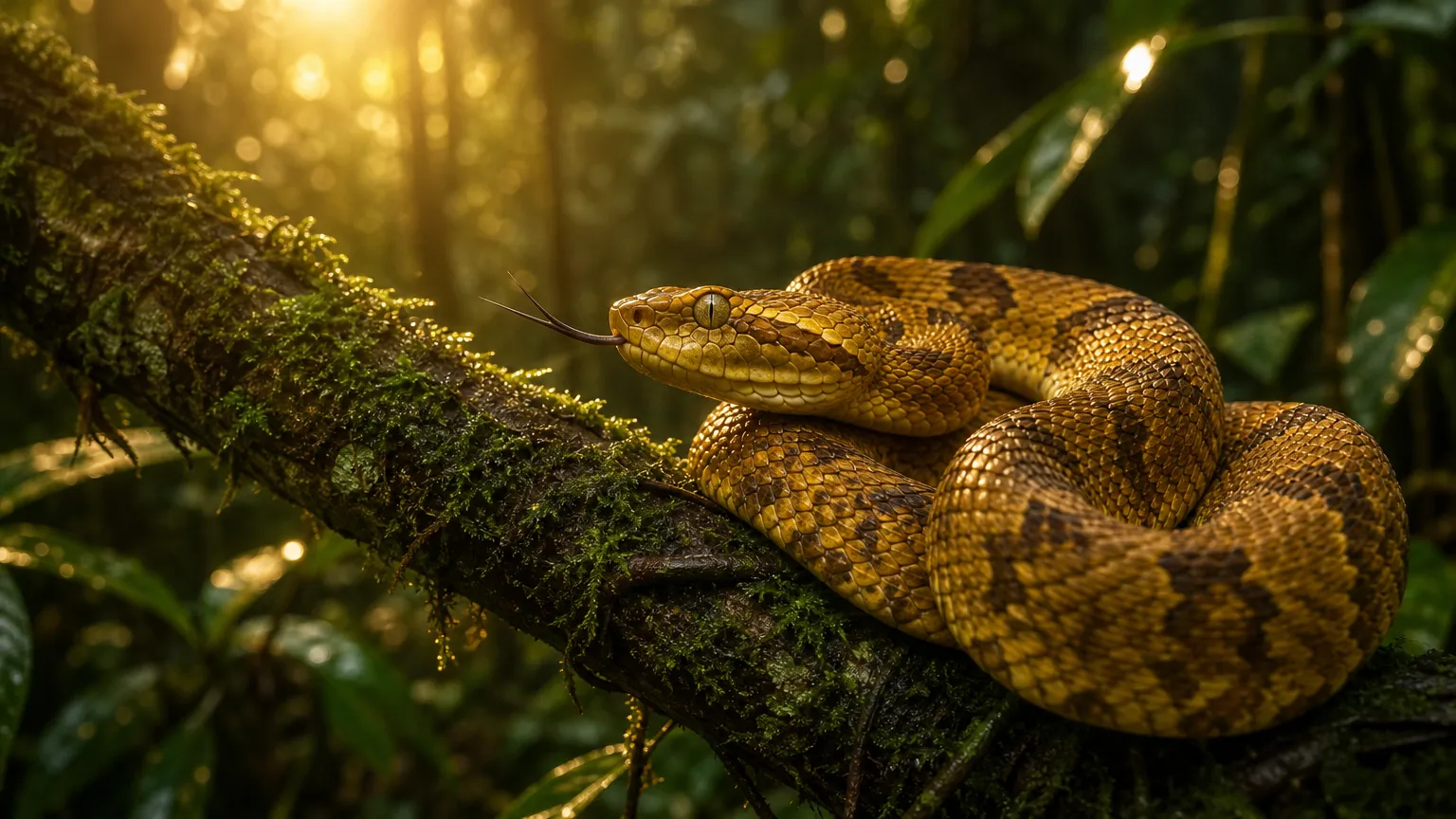
Bothrops insularis, the golden lancehead, is a snake species that exists in a single place in the world: Queimada Grande Island.
It evolved in isolation from the mainland after sea levels rose at the end of the last ice age, roughly 11,000 years ago, turning what had been a peninsula into an island. With no natural land predators and a specific food source (migratory birds that use the island as a stopover), the golden lancehead developed unique traits: it is arboreal (it lives in the trees, not on the ground), its venom is three to five times more potent than that of the mainland jararaca, and its body is lighter and more agile than those of its mainland relatives.
The venom of Bothrops insularis has particularly aggressive hemotoxic and cytotoxic properties: it causes tissue necrosis around the bite and can lead to multiple organ failure. The adaptation makes evolutionary sense: to hunt birds in midflight, the venom has to act fast, before the bird can get away. It is the same principle of extreme specialization that produced the defense system of the Well of Barhout in Yemen, another place nature seems to have designed to keep humans away.
Estimates of the snake population density on the island vary enormously: from one snake per square meter (a figure often quoted in the media, and probably exaggerated) to more conservative scientific estimates of 2,000 to 4,000 individuals on the entire island. Whatever the real number, it is enough to justify the ban on unauthorized landings.
The lighthouse keeper and the legend
Every forbidden island needs a legend. Queimada Grande has one and, like every good legend, it is impossible to fully confirm or debunk.
The most widespread version says that the last lighthouse keeper to live on the island, before the light was automated, lived there with his family. One night, snakes came in through an open window of the lighthouse. The keeper, his wife and their children tried to escape through the forest toward their boat. None of them made it.
There is no official record confirming this story. The Queimada Grande lighthouse was operated by the Brazilian Navy and later automated in 1985; there is administrative documentation of that. But the records of the keepers who worked there before automation are not widely available to the public, and the story circulates without a verifiable source.
What is documented are accounts from fishermen who landed on the island before formal restrictions were in place and came back with stories of a disturbing number of snakes. There are also medical records of golden lancehead bites among workers who visited the island on authorized expeditions.
Why the ban exists, and who can go in
The Brazilian Institute of Environment and Renewable Natural Resources (Ibama) prohibits unauthorized landings on Queimada Grande Island for two simultaneous and seemingly contradictory reasons: to protect visitors from the snakes and to protect the snakes from visitors.
Bothrops insularis is listed as Critically Endangered on the IUCN Red List. The total population, all of it concentrated on this 430,000-square-meter island, is estimated at fewer than 4,000 individuals. Wildlife trafficking is a real threat: rare snakes with unusual venom fetch high prices on the black market for exotic reptiles, and clandestine expeditions to capture specimens have been documented.
Who can go in legally: researchers authorized by Ibama and the Navy, medical teams (there is an agreement between the Navy and the Instituto Butantan for periodic venom collection for research) and the Navy itself, to maintain the lighthouse.
The Instituto Butantan, in São Paulo, has an active scientific interest in Bothrops insularis because its venom contains compounds with pharmacological potential, substances being studied for the development of anticoagulants and cardiovascular treatments. The species' evolutionary isolation produced a venom chemistry different enough from that of its mainland relatives to have significant research value.
What the island once was, and what it may still reveal
Queimada Grande was not always an inaccessible snake island. Before rising seas isolated it, it was part of the mainland, and there is evidence of historical human presence beyond the lighthouse.
Nineteenth-century records mention attempts to farm the island; hence the name "Queimada" ("burned"), a reference to the fires set to clear vegetation for planting. The attempts failed, presumably because of how hard it was to work land so densely inhabited by snakes.
Underwater archaeology around the island is also practically unexplored. The continental shelf between Queimada Grande and the São Paulo coast was dry land 11,000 years ago, and any prehistoric coastal settlement in the region would now be underwater. It is the same geological process that hid the sunken city of Dwarka, in India, for millennia, where ancient texts described a civilization swallowed by the ocean.
And there are more basic questions about the island itself that still lack a full answer: what exactly is the current density of the snake population? How is the species responding to climate change? Is ocean warming affecting the routes of the migratory birds that are the golden lancehead's main food source?
A study published in 2015 in the Journal of Venomous Animals and Toxins raised concerns about the species' population decline, possibly linked to fungal diseases affecting snakes worldwide. The irony of an island considered too dangerous for humans being itself in danger was not lost on researchers.
Snake Island around the world
"Snake Island Brazil" is one of the most popular English-language search terms about the country, ahead of many well-known tourist attractions. Documentaries, YouTube videos and international news reports about Queimada Grande have racked up tens of millions of views.
There is something deeply human in the mix of prohibition, danger and beauty the island represents. It is a place a few kilometers from busy cities, visible from the mainland on clear days, and completely off-limits to almost everyone. It is not so different from the fascination exerted by Mexico's Zone of Silence: another patch of land that seems to play by its own rules, where, according to reports, instruments fail and myths grow on a foundation of real phenomena.
The lighthouse still works. Its light flashes automatically over the ocean every night. And beneath it, in the island's dark forest, golden lanceheads hunt birds in the trees with a venom that evolution perfected over eleven thousand years of isolation.
You can see the island. You simply can't get there.
Brazil holds more geographic mysteries than most people imagine. For stories that cross borders and have global appeal, read about the Zone of Silence in Mexico, the "Mexican Bermuda Triangle," and about the Nazca Lines in Peru. For a mysterious figure with ties to the world of poison and alchemy, see Cagliostro.