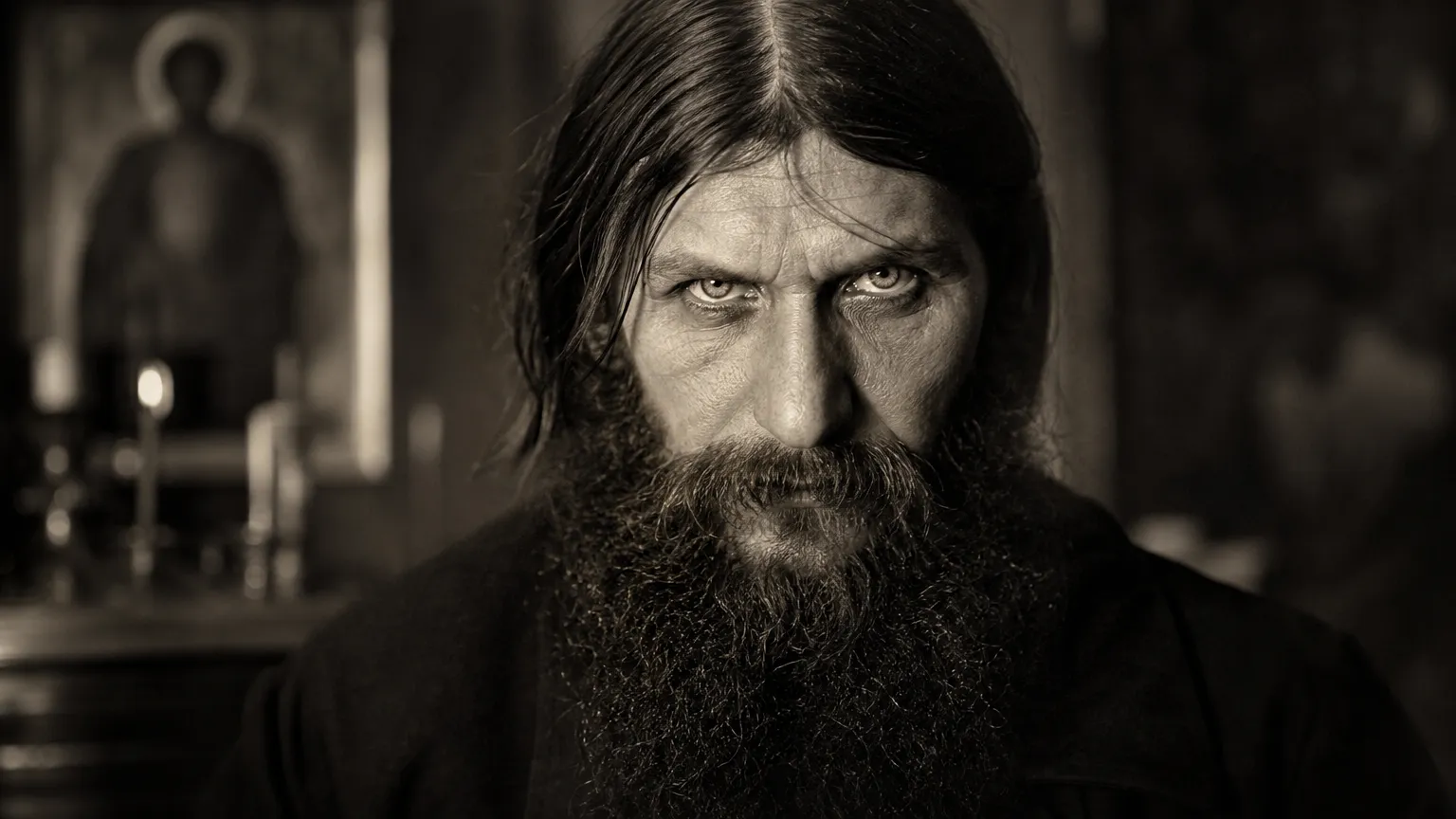
Mitar Tarabich: the illiterate peasant who supposedly foresaw humanity's future
A Serbian peasant who never learned to read and a priest who supposedly wrote it all down. Over a century later, the Kremna Prophecies still divide believers and skeptics.
- When
- 1829–1899
- Where
- Kremna, Zlatibor, Serbia
- Status
- Under debate competing explanations, no consensus
By The Echoes of the Past team. Published November 2, 2026. 10 min read.
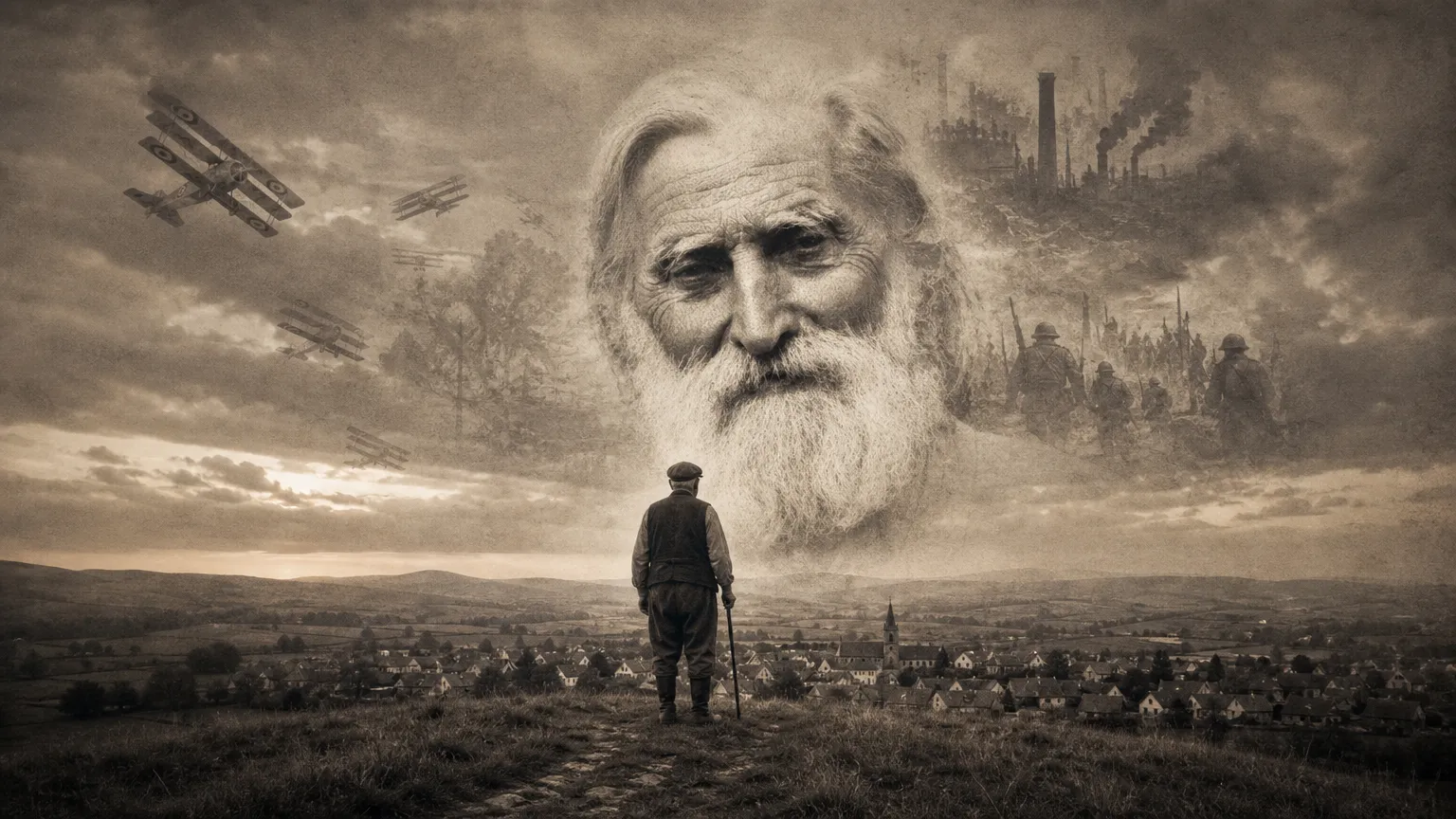
Who was Mitar Tarabich? The seer of the Serbian mountains
In the heart of the Balkans, among the hills and forests of the small village of Kremna, in Serbia, there lived in the 19th century a man credited with visions that push the limits of what the human mind can conceive. Mitar Tarabich was born in 1829 and died in 1899: a seemingly ordinary life, that of an illiterate peasant with calloused hands and narrow horizons. But what, according to tradition, came out of his mouth in moments of trance or spiritual ecstasy would make his name echo for decades, all the way to the discussion forums of the 21st century.
Tarabich left nothing in writing. He couldn't have: he never learned to read or write. According to tradition, his visions were recorded by his godfather, the Orthodox priest Zaharije Zaharich, who gathered them into a set of premonitions that would become known as the Kremna Prophecies. It is through that manuscript, or through what is presented as that manuscript, that the world came to know, and to fear, the words of this obscure Serbian peasant.
The question facing anyone who looks into his story is a disturbing one: how could a man with no formal education, living in a remote Balkan village in the 19th century, have described in such detail, as his promoters claim, events that would only happen decades (sometimes a century) after his death?
The Kremna Prophecies: the manuscript that haunted Serbia
The seer and the priest
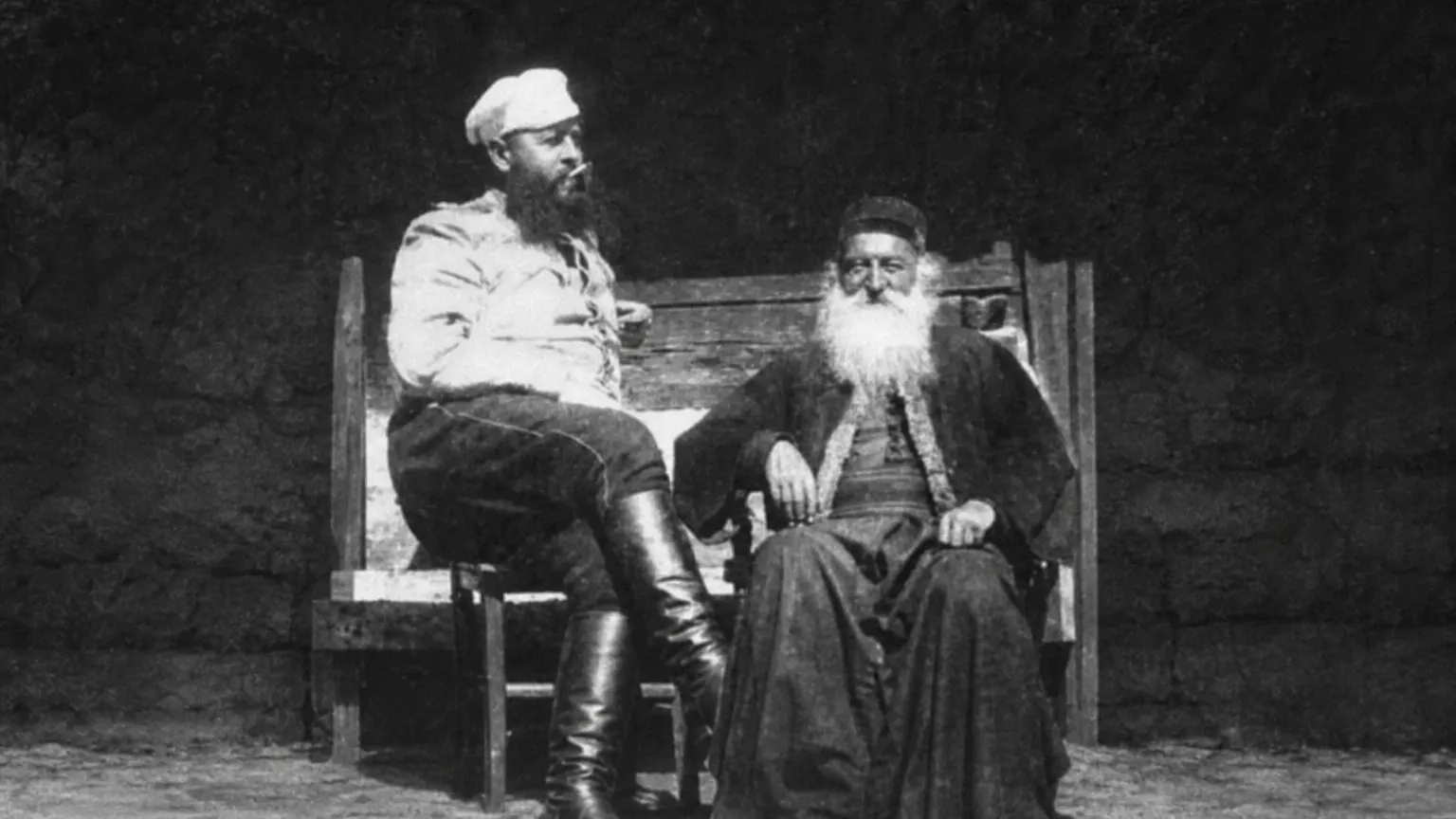
The story of the prophecies begins with an unusual relationship between two men from completely different worlds. Zaharije Zaharich was an educated Orthodox priest, a man of letters and of faith, who was close friends with his godson Mitar. According to tradition, when he realized that the peasant had visions that were anything but ordinary, Zaharich began recording everything with meticulous care.
The priest, the accounts say, was no fool: he supposedly recorded the prophecies with skepticism while preserving them with reverence. In the notes attributed to him, Mitar appears as someone who, at certain moments, seemed not to be entirely present in the world of the living, as if his consciousness were wandering through times and places that did not yet exist.
According to the accounts, the visions began after Mitar claimed to have had encounters with angels or spiritual beings. The Serbian Orthodox Church regarded this with ambivalence: it neither openly endorsed nor condemned the peasant, who was never recognized as an official prophet by the institution.
What the manuscript contains
Zaharich's manuscript arranges the prophecies by historical period. Tarabich supposedly spoke about Serbia, about the Balkans and about the whole world, from the near past to the distant future. Some prophecies referred to events that would take place within the seer's own lifetime, which would have allowed them to be checked right away. Others pointed to a much more distant horizon.
What made the prophecies famous, and controversial, was the claim that some of them match, with remarkable precision, historical events that took place after Tarabich's death in 1899.
The most famous prophecies and their alleged fulfillment
The assassination of King Alexander Obrenović
One of the prophecies most often cited by students of the Kremna visions is the one said to have foretold the assassination of the Serbian king Alexander Obrenović, on June 11, 1903. Alexander and his wife, Draga, were brutally murdered by Serbian army officers in Belgrade, in one of the most shocking episodes in the political history of the Balkans.
According to the prophecies' defenders, Tarabich described the violent fall of a Serbian royal line, alluding to betrayals from within the inner circle of power. This would happen, according to the manuscript, before Serbia entered a period of great upheaval.
Critics point out that political instability in Serbia was so obvious at the time that any careful observer could have predicted internal conflict and violence at the top. The question, as always in these cases, is how specific the predictions really are, and how much later interpretation shapes what was "predicted."
World War I and the fire from the sky
Perhaps the most widely discussed prophecy is the one his followers link to World War I (1914–1918). Tarabich supposedly described a gigantic war involving nations from all over the world, in which men would fight with weapons that spit fire and smoke and flying machines would rain destruction on entire cities.
For those who believe in the Serbian peasant's gift, the description of "iron birds" destroying cities fits perfectly with the pioneering use of military aircraft in World War I, a technology that simply did not exist in 1899. The Wright brothers' first flight would not take place until 1903, four years after Tarabich's death.
The idea that an illiterate man from the Balkans glimpsed aerial warfare before the airplane was even invented still feeds the fascination with his words.
World War II and the evil man from the West
When it comes to World War II (1939–1945), the Kremna prophecies are even more unsettling for believers. Tarabich supposedly spoke of a man of humble origins and a powerful voice who would rise in the West, bewitch entire nations and lead the world into an unprecedented slaughter.
For many interpreters, the description clearly points to Adolf Hitler, an Austrian of modest origins who rose to power through the force of his rhetoric, won over crowds and unleashed the deadliest war in human history.
Once again, skeptics warn that the description is vague enough to fit several authoritarian leaders in history. The human tendency to see patterns where there is ambiguity, known in psychology as apophenia, is central to the debate over prophecies.
Tarabich and the modern world: technology, disease and the end times
Horseless carriages and talking tubes
Some scholars of Serbian folklore and paranormal enthusiasts highlight passages in Zaharich's manuscript that would seem to describe inventions of the 20th and 21st centuries. Among them:
- Horseless carriages racing along the roads, interpreted as automobiles.
- Tubes that let people far apart hear and see each other, associated with the telephone and, more recently, with video calls.
- An invisible web that would cover the whole world, through which people could communicate instantly, read by many as a description of the internet.
These are the passages that most fuel the popular imagination in the 21st century. A quick search on social media turns up hundreds of posts linking Tarabich's words to digital technology, smartphones and the hyperconnected world we live in.
The great plagues
Another group of prophecies that has drawn renewed attention in recent years concerns diseases that would spread across the world with overwhelming force. Tarabich supposedly spoke of "evils that would come from the air" and kill without people knowing where they came from, striking entire nations at the same time.
With the COVID-19 pandemic in 2020, the Kremna prophecies spread massively on social media again, especially in Eastern Europe and the Balkans. Many of the quotes that went viral, however, were challenged by researchers as distortions of, or additions to, the original text, a common problem in this kind of oral and manuscript tradition.
The debate: a genuine prophet or a myth built by history?
The believers' arguments
For those who believe in Mitar Tarabich's prophetic gift, the case is cumulative: no single prophecy would be enough to convince, but the set of predictions that "came true" would represent, in their view, a statistical probability that coincidence cannot explain. On top of that:
- The context he lived in: an illiterate peasant with no access to newspapers, books or any organized information about the world beyond Kremna.
- The timing of the prophecies: according to them, recorded before the events, not after.
- The specificity of some details, which would go beyond what one would expect from generic predictions.
Believers also point to the Serbian Orthodox tradition of respect for local seers and saints, part of a worldview that does not draw a strict line between the spiritual and the everyday.
The skeptics' arguments
The doubts about the authenticity of the Kremna prophecies are just as strong:
The retrojection problem: much of the "prophecy" may have been written, edited or expanded after the events it supposedly predicted. Zaharich's manuscript passed through several hands before being published, and there is no way to guarantee that the original text was not altered over time.
Deliberate vagueness: many of the visions are written in language vague enough to fit several events. This is what scholars call the Barnum effect: generic statements that seem specific to anyone who already knows what they want to find.
Cherry-picking: the prophecies' defenders tend to highlight the ones that "worked" and ignore those that never came to pass or that simply have no verifiable match with historical events.
No original documentation: there is no original manuscript dated and authenticated by independent historians. What exists are copies and versions published decades after the events they supposedly predicted.
The legacy of Kremna: between popular faith and media exploitation
Kremna today
The small village of Kremna, in the mountainous Zlatibor region, has become a pilgrimage site for the paranormal-curious and for devotees who believe in the spiritual power of the place. There are memorials dedicated to Tarabich, and the mystical tourism around his name is part of the region's cultural identity.
Serbia has a complicated relationship with the figure of the seer: neither fully folklorized nor officially recognized, he occupies the ambiguous space between popular legend and historical speculation.
The prophecy of the end times
One of the darkest visions attributed to Tarabich describes a future in which humanity would have advanced technologically to the point of living in a kind of automated luxury, but would have completely lost touch with nature and spirituality. In that time, according to the prophecy, people "would know everything, but understand nothing." Knowledge would be within everyone's reach, but wisdom would be absent.
This diagnosis, which sounds strangely contemporary, is among the passages that most capture the imagination of those who read the Kremna prophecies today. We live in an age of unlimited access to information and, paradoxically, of collective existential disorientation. Whether poetic coincidence or genuine vision, the sentence attributed to the illiterate peasant resonates with unsettling precision.
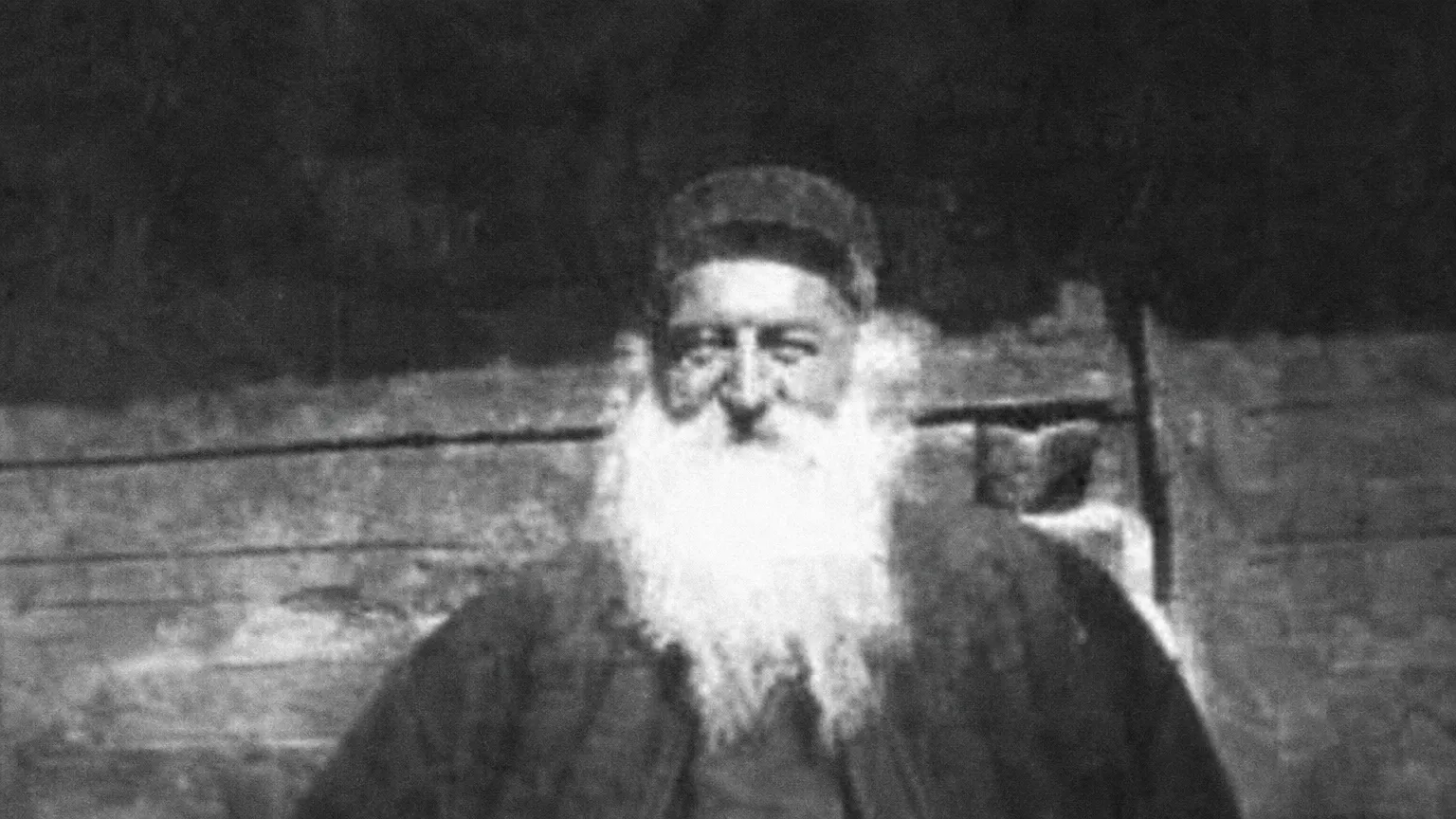
Why are we still fascinated by figures like Mitar Tarabich?
The answer may lie less in the prophecies themselves and more in what they represent for us. In a world governed by science, rationality and the predictability of algorithms, the figure of the seer, especially the humble, unassuming seer who did not choose his gift, represents the possibility that there is something beyond what we can measure and calculate.
Tarabich did not ask to see the future. He did not charge for his visions. He did not found a sect or write a book. He was just a peasant who, according to the accounts, sometimes looked beyond the veil of time and described what he saw to a priest who had the wisdom to write it down.
Conclusion: the peasant who still speaks to the world
Mitar Tarabich died in 1899, but his words, or whatever is left of them, keep circulating, reread, reinterpreted and debated. His legacy is that of every great historical enigma: it is never solved, and every new generation that encounters it keeps it alive.
The Kremna Prophecies invite a reflection that goes beyond the supernatural: they force us to think about the limits of human knowledge, about how we build narratives from fragments of the past and about how much we want to believe that someone, somewhere, saw where we are headed.
And perhaps that desire, deeply human and universal, is the only prophecy Mitar Tarabich truly fulfilled.