Rasputin: what the secret Russian files revealed and what they still hide
A Siberian peasant with no schooling made his way to the center of power in tsarist Russia. What the documents say about his influence, his politics and his death.
- When
- December 1916
- Where
- St. Petersburg, Russia
- Status
- Partly explained the main explanation is accepted; details remain open
By The Echoes of the Past team. Published November 2, 2026. 4 min read.

The story of Rasputin's murder is one of the most dramatic of the 20th century: poisoned with enough cyanide to kill ten men, shot three times, beaten and still found alive by his killers, who finally drowned him in the Neva River in December 1916.
The problem is that this version is largely exaggerated, created by the killers themselves to glorify their deed. The medical reports and police records tell a different story.
But what the Russian archives (including those of the Okhrana, the tsarist secret police) reveal about Grigori Rasputin is, in many ways, more intriguing than the legend of the immortal monster.
Who Rasputin really was
Grigori Yefimovich Rasputin was born around 1869 in Pokrovskoye, Siberia. He had no formal education. He had a local reputation for gifts of healing and spiritual vision. In the Russian Orthodox tradition of the strannik, the spiritual pilgrim who wanders the country in search of God, Rasputin traveled widely and reached the capital, St. Petersburg, around 1903.
What set him apart from dozens of other wandering preachers and healers roaming tsarist Russia was a combination of intense physical charisma, a practical command of hypnosis and suggestion techniques that he probably developed through experience, and a singular historical opportunity: the son of Tsar Nicholas II, Tsarevich Alexei, had severe hemophilia.
Rasputin was introduced to the imperial family in 1905. And he showed, consistently and for years, the ability to ease Alexei's bleeding crises when no doctor could. It was the same kind of inexplicable effectiveness that Nicolas Flamel claimed for his medicinal compounds in the 14th century, and that Cagliostro displayed in his 18th-century cures: three men from different eras who convinced the most powerful people of their time to trust them.
How? That is the central question about Rasputin that the documents do not fully resolve.
The hemophilia problem
The tsarevich's hemophilia was severe. Internal bleeding crises caused excruciating pain and put his life at risk. The doctors of the time had no effective treatment: they basically tried to keep the boy still and wait.
Rasputin would arrive, spend some time with Alexei, and the crises would ease. This happened again and again, documented by multiple witnesses, including members of the imperial family and doctors.
The most widely accepted hypotheses today: hypnosis or deep suggestion that reduced Alexei's anxiety and crying, which lowered his blood pressure and helped control the bleeding; Rasputin's alleged instruction to the family not to use aspirin (which inhibits clotting and which doctors of the time prescribed as a painkiller); or a combination of both.
None of these explanations is supernatural. But the combination of consistent results and no clear explanation was enough for Tsarina Alexandra, desperate for her son's life, to give Rasputin an influence over the imperial family that was, politically, devastating.

The Okhrana files
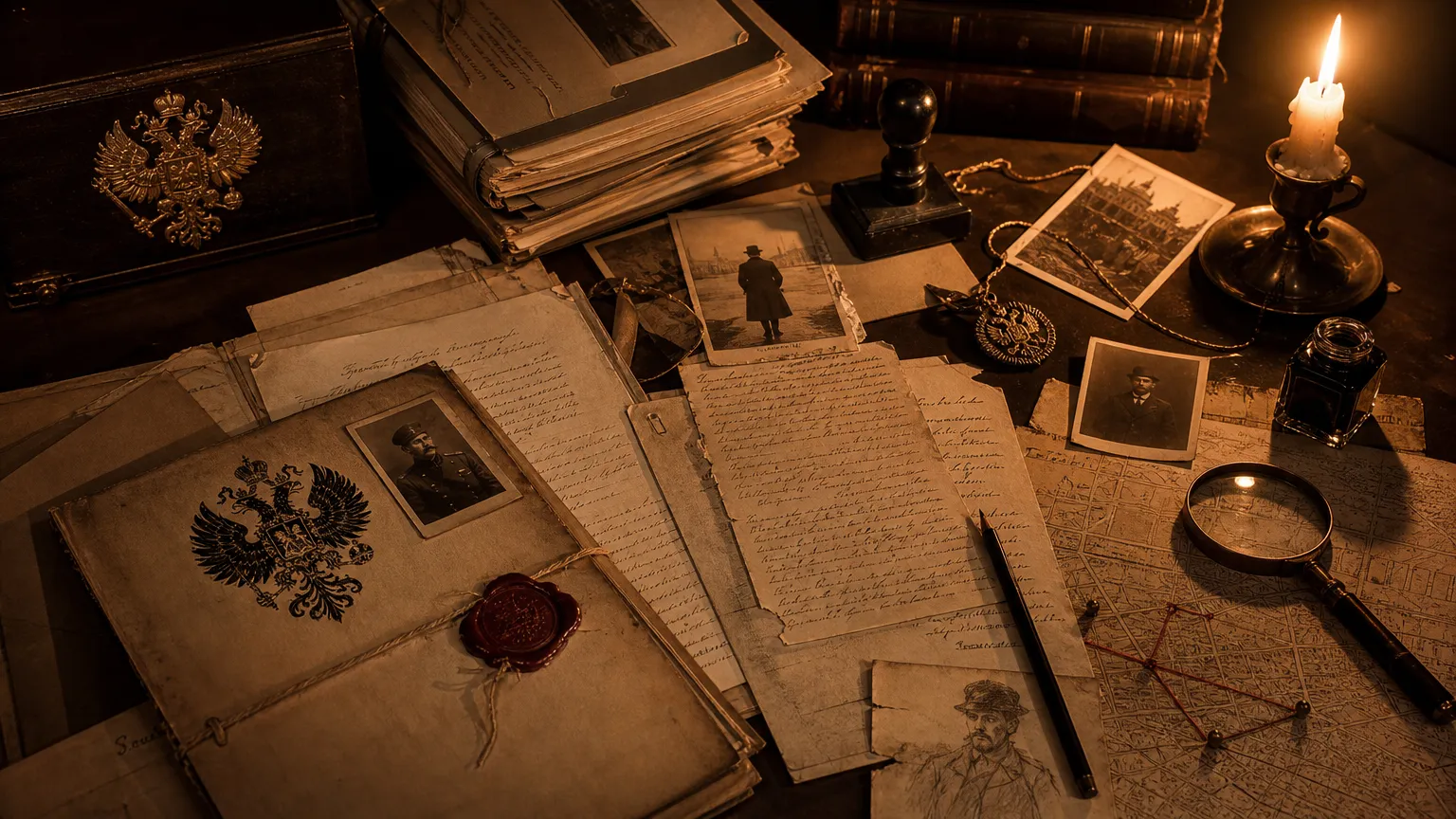
The Okhrana, the tsarist secret police, watched Rasputin with growing attention as his influence over the imperial family increased. The surveillance reports that survive are revealing.
The agents recorded Rasputin's visitors, his statements, his behavior. The portrait that emerges is of a man of deep contradictions: genuinely religious on the one hand, and given to drinking bouts and scandalous sexual behavior on the other, which he justified with a peculiar theology of sin and redemption.
The reports also show something less well known: Rasputin had political positions. He was consistently against Russia's entry into World War I. He tried on several occasions to turn the tsar against the conflict. When his efforts failed and the war began, he predicted it would be a disaster for the Romanovs.
On that, he was right.
The death and the autopsy
Prince Felix Yusupov, one of the killers, published memoirs in which he described the murder as a saga of horror: Rasputin surviving the poison, the bullets and the beating, and still able to try to strangle Yusupov before finally being drowned.
The autopsy, performed by the forensic physician Kosorotov, does not confirm this epic version. Rasputin was shot three times, and the shot to the forehead was fatal. The report found no significant amount of cyanide in the tissues. The cause of death was the shot to the head.
The story of the immortal monster was a deliberate construction by the killers, men of high social standing who needed to present themselves as heroes who had rid Russia of a demon, not as murderers who had killed a peasant with a shot to the head.
The truth about Rasputin is fascinating enough without exaggeration: an illiterate Siberian who came to hold real influence over Russia's last tsars, who eased the suffering of a hemophiliac boy by means that medicine did not fully understand and who, according to some accounts, predicted his own death and the collapse of the dynasty with an accuracy his contemporaries only recognized later.
And the parallel with Nikola Tesla is unavoidable: two men of extraordinary talent who were used by the powerful while they were convenient and discarded when they became inconvenient. One died murdered; the other, in poverty.
For other figures who held outsized influence over the powerful of their time, read about the Count of Saint-Germain and about Cagliostro. For the fate of the family Rasputin could not save, see Anastasia Romanov.