The Dyatlov Pass incident: nine hikers found dead in the snow and no explanation that fully closes the case
They left the tent at night, in cold that reached -30°C, without the clothes for it. Some had fractures the medical examiner compared to the impact of a car.
- When
- Night of February 1–2, 1959
- Where
- Kholat Syakhl, Sverdlovsk Oblast, Russia
- Status
- Under debate competing explanations, no consensus
By The Echoes of the Past team. Published November 2, 2026. 6 min read.
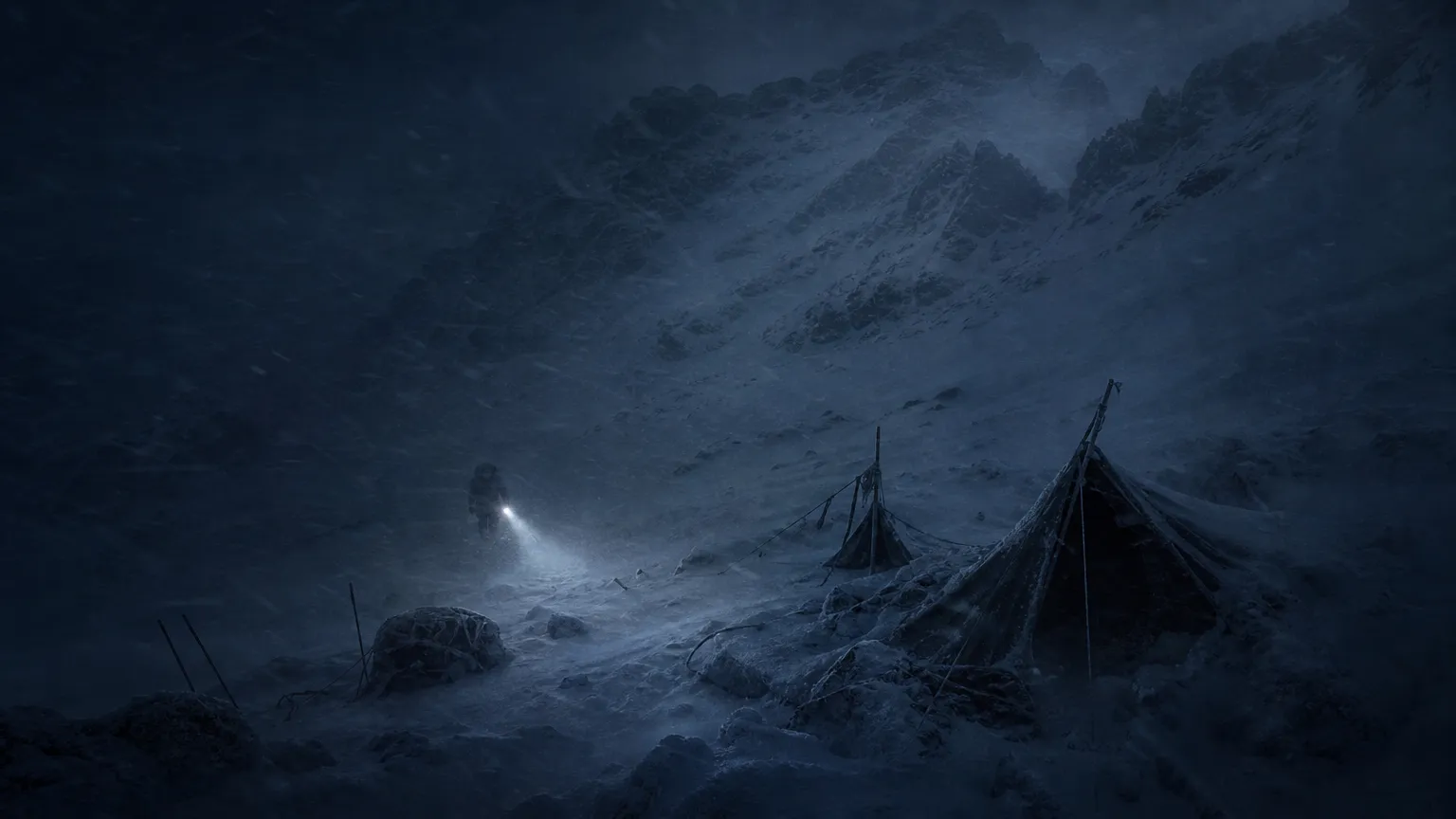
On the night of February 1–2, 1959, nine students and former students of the Ural Polytechnic Institute died on a slope of Kholat Syakhl mountain, in the northern part of the Sverdlovsk region of the Soviet Union.
What investigators found when the search teams located the group, weeks later, was so disturbing that the case was never fully closed.
The tent had been torn open from the inside, not the outside. Its occupants had headed toward the forest below in clothing unfit for temperatures that reached -30°C. Some were barefoot. Some had severe bone fractures (ribs and skull) that a medical examiner described as caused by an "extraordinary force." Two bodies showed unusual levels of radioactivity. One was missing the tongue and the eyes.
The Soviet investigator who led the inquiry closed the file with a conclusion that explained nothing and still echoes today: the students died as a result of "an unknown and irresistible force."
The group and the expedition
Igor Dyatlov was 23 and an experienced skier and mountaineer. The other eight members of the group were between 20 and 38, all with experience on winter expeditions in the Urals.
The goal was to complete a Category III trek, the highest difficulty level in the classification, which included climbing Kholat Syakhl ("Mountain of the Dead" in the local Mansi language). It was ambitious, but within the group's abilities.
They left Sverdlovsk (now Yekaterinburg) on January 23. The last entries in Dyatlov's diary date from February 1. That night, the group pitched the tent halfway up the slope of Kholat Syakhl, a strange choice, since there was forest farther down that offered natural shelter from the wind and snow.
No one knows why they chose that spot.
What the investigators found
The tent was located on February 26. It was partly buried in snow. The canvas had been cut from the inside out, with a knife or some other tool, by people inside the tent trying to get out fast.
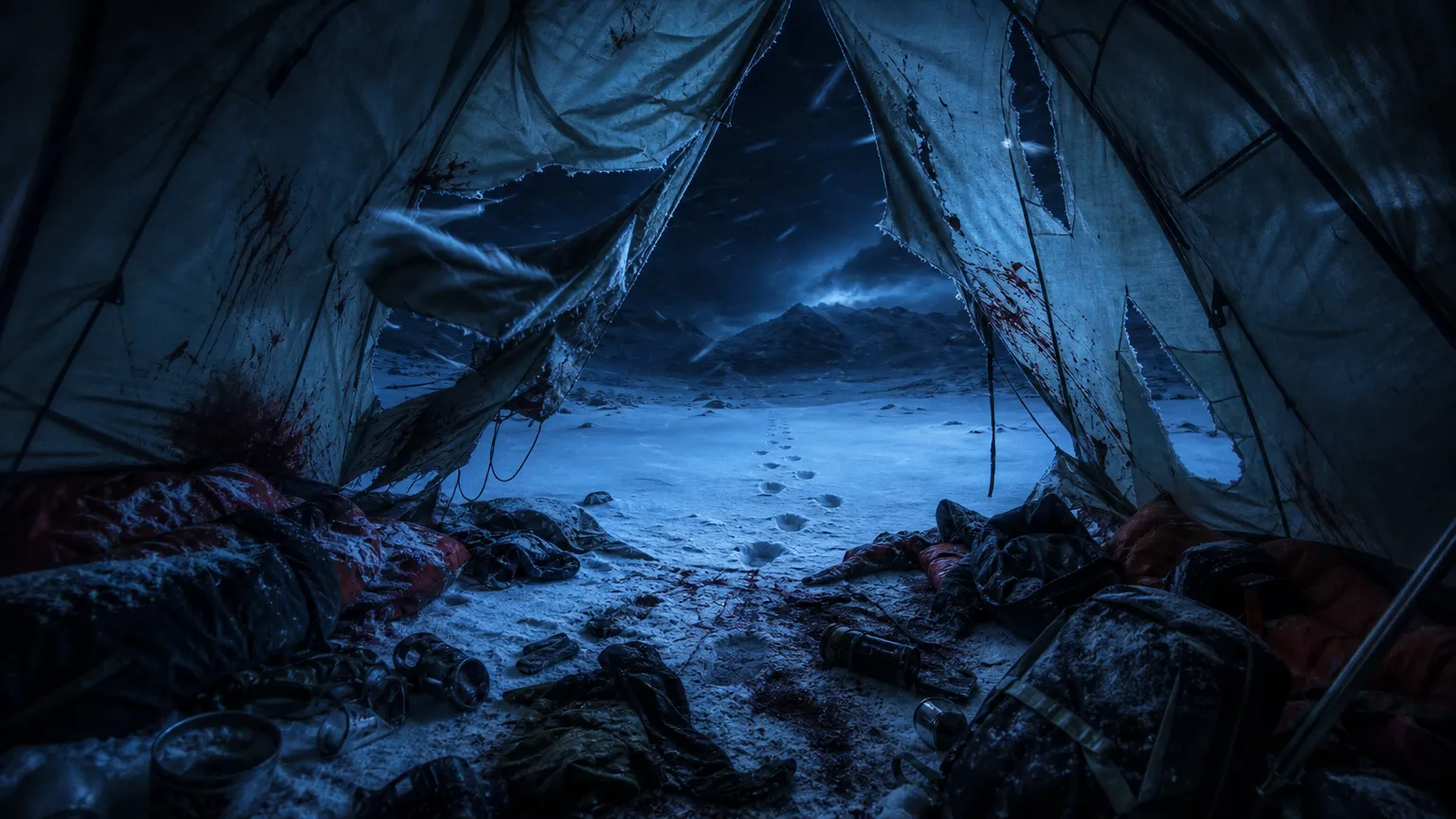
Tracks in the snow showed that nine people had left the tent and gone down the slope toward the forest. The tracks showed that some had walked normally, others had dragged their feet, and others still had moved in groups.
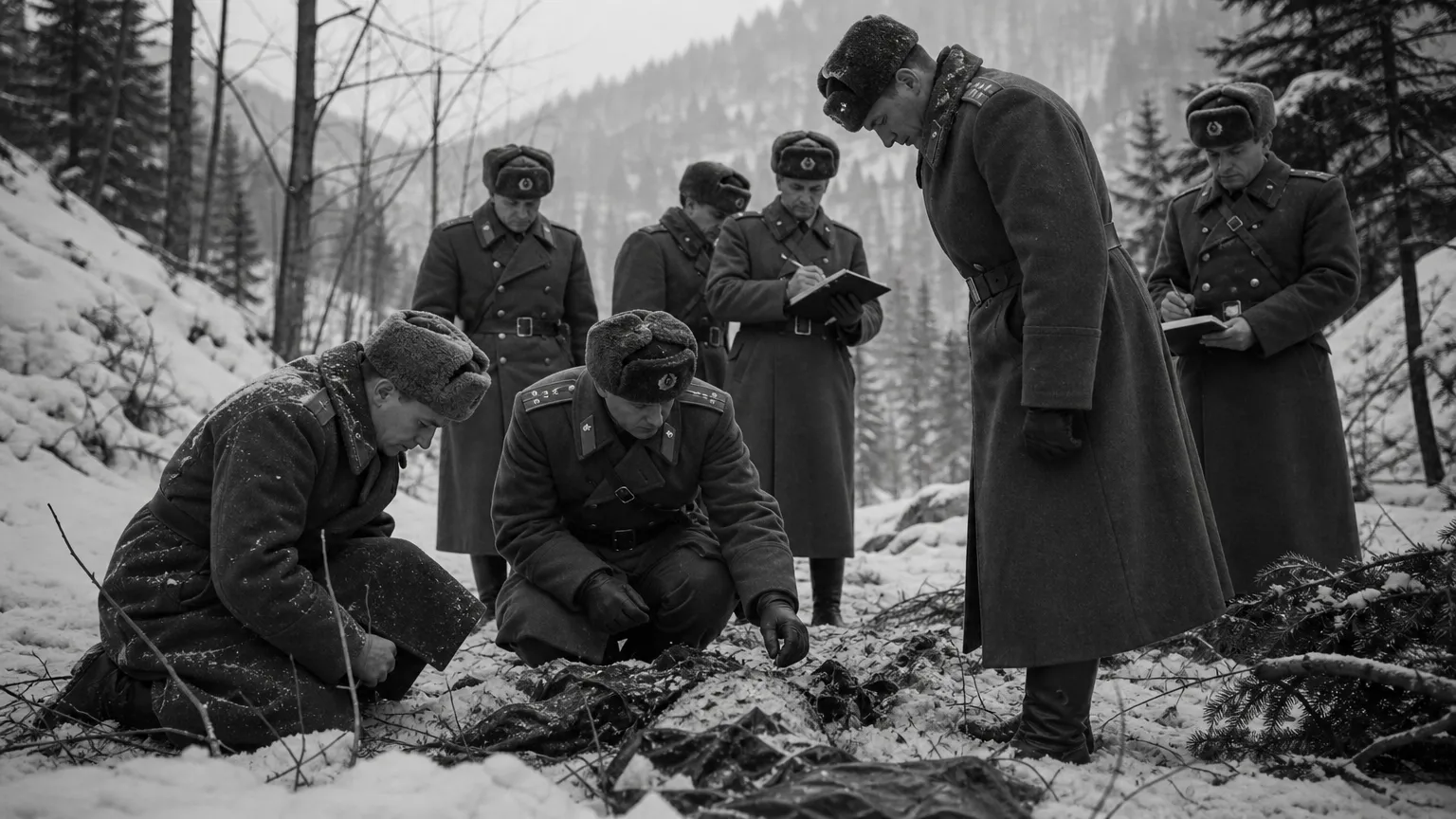
The first two bodies were found near a large cedar, 1.5 kilometers from the tent. They were barefoot and wearing only their underwear. Branches of the cedar up to 5 meters high were broken: someone had tried to climb the tree. There were ashes from a small fire.
Three bodies were found in positions suggesting they had been trying to get back to the tent, as if they had changed their minds halfway.
The remaining four bodies were found months later, in May, when the snow melted. They lay in a snow-covered ravine, 75 meters from the cedar. These four were better dressed than the others, in clothes from some of the first bodies found, taken from people who were already dead. And they had the most serious injuries.
Zolotaryov and Dubinina had multiple rib fractures. The medical examiner described the force needed to cause those fractures without leaving external bruising as equivalent to the force of a car. Dubinina had lost her tongue, her eyes and part of the soft tissue of her face. Zolotaryov had lost his eyes.
The theories and their problems
Avalanche: the theory currently most accepted, adopted by the Russian investigation reopened in 2019. An avalanche would have struck the tent, causing panic and forcing the group out in a hurry. The fractures would have been caused by the impact of the snow.
The problem: field investigators in 1959 found undisturbed snow around the tent, with no evidence of an avalanche. The tent was in a low-risk area. And avalanches don't explain the canvas cut from the inside out.
The investigation reopened in 2019, conducted by the Russian authorities, concluded it was an avalanche, but it did not convince every independent expert who has studied the case.
Infrasound: under certain topographic conditions, wind can produce infrasound, sound frequencies below the threshold of human hearing that, at sufficient intensity, can cause unexplained panic, disorientation and a sense of a threatening presence. Supporters of this theory argue that infrasound could provoke exactly the behavior described: a desperate flight with no visible cause.
The problem: it doesn't explain the fractures or the injuries to Dubinina's soft tissue.
Weapons test: the Ural region was a Soviet military testing area. Exposure to an experimental weapon would explain the radioactivity and the internal injuries without external bruising. The Soviet Union would not have been the first to cover up an accident involving secret weaponry.
The problem: there is no direct evidence. And according to later analysis, the level of radioactivity found was within a range that could have come from the group's own equipment (lanterns and compasses of the time often used radium).
Dubinina's tongue and eyes: the missing tissue was first interpreted as deliberate mutilation or the work of animals. The theory most accepted today is accelerated decomposition: Dubinina's body lay for months under melting snow, in contact with running water, in a ravine. Soft tissue, which decomposes faster, can create the appearance of removal.
Possible. But disturbing.
Why the case won't close
The Dyatlov Pass incident is disturbing for one specific reason: each theory explains some elements and leaves others unanswered. No single explanation coherently covers the tent cut from the inside, the inadequate clothing, the severe fractures without external bruising, the radioactivity and Dubinina's injuries.
That may mean there were multiple events in sequence: an initial event that caused the panic and the exit from the tent, followed by progressive hypothermia that produced increasingly desperate survival behavior, with the fractures caused by falls in zero visibility and severe disorientation.
Or it may mean that what happened that night on the slope of Kholat Syakhl was something the 1959 investigators would not, or could not, fully document.
The mountain of the dead has kept its secrets for more than six decades. It will probably keep them a while longer. It is the same persistence of the unexplained that marks the Dancing Plague of 1518, in which the collective behavior of groups under extreme stress produced results that medicine still cannot fully explain, and the disappearance of D.B. Cooper: the American Northwest, like the Soviet Urals, simply never gave back the answer.
For other events in which an extreme environment was the stage for unexplained deaths, read about the Tunguska event, also on Russian soil, and the Zone of Silence in Mexico, where the environment itself seems hostile in ways physics has yet to fully explain. For equally disturbing group behavior in another extreme situation, see the Dancing Plague of 1518. For a figure who also met a mysterious death in an isolated place, see the Isdal Woman.