The Voynich manuscript: the book in an unknown language that has defeated a century of codebreakers
Plants that do not exist, star diagrams, and a text no codebreaker has managed to read. The parchment dates to the early 15th century.
- When
- c. 1404–1438
- Where
- Beinecke Library, Yale University, United States
- Status
- Under debate competing explanations, no consensus
By The Echoes of the Past team. Published November 2, 2026. 4 min read.
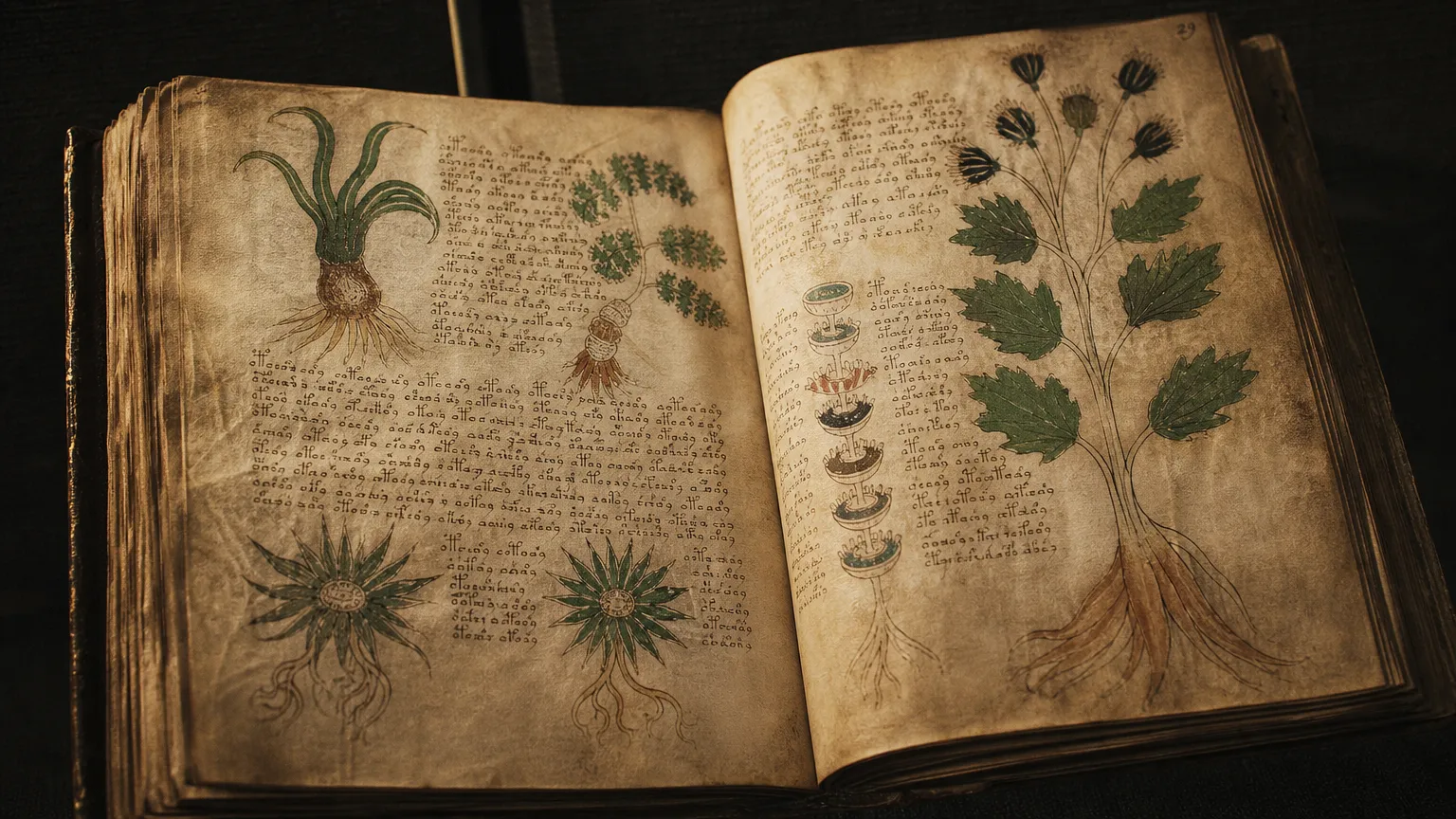
At Yale's Beinecke Library, kept under controlled temperature and humidity, there is a 240-page book that no living person can read.
The Voynich manuscript is named after the Polish book dealer Wilfrid Voynich, who acquired it in 1912 from a Jesuit college in Italy. It is written in a script that matches no known language, and it has withstood a century of attempts to decipher it, attempts that included the best American cryptographers of World War II and, later, those of the CIA and the NSA, computational linguists from the world's leading universities, and a global community of amateur enthusiasts.
No one has managed to read a single sentence.
What is in the manuscript
The manuscript has roughly 240 pages (some are missing). A book written by someone who expected others to read it, and that no one has ever read, has an unsettling parallel in Easter Island's rongorongo: another script that the authors' own descendants can no longer decipher.
The pages fall into thematic sections identified by researchers:
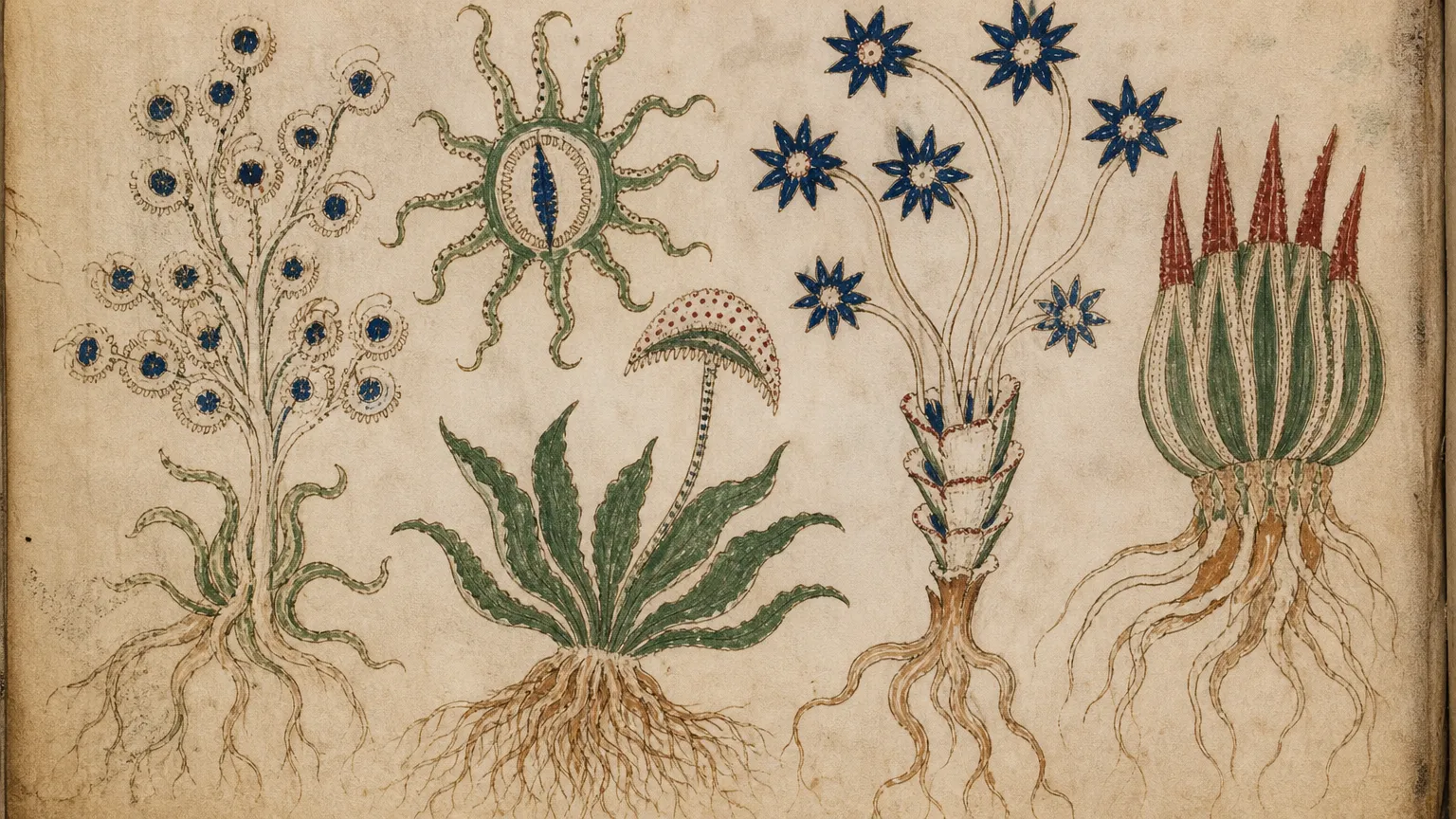
Botanical section: Most of the manuscript. Drawings of plants with elaborate roots, stems, flowers, and seeds. The problem: most of the plants match no known species. Some combine features of real plants in impossible ways.
Astronomical section: Diagrams of stars, constellations, and what appear to be depictions of the Sun and the Moon. Some circular rosettes with stars that researchers have tried to match to known celestial patterns, without consensus.
Biological section: The most unsettling pages: small female human figures immersed in tubes, pools, and interconnected structures. Their meaning is completely opaque.
Pharmaceutical section: Jars, containers, and what look like prescriptions or formulas, with text that may identify ingredients or doses.
Recipes section: The final section, with paragraphs of text marked by stars or flowers, possibly a list or a collection of recipes.
Throughout the manuscript, the text flows consistently from left to right, with statistical patterns that linguists identify as typical of natural writing, not of random or meaningless substitution.
The attempts to decipher it
The manuscript has been analyzed by some of the most brilliant cryptographers of the 20th century.
William Friedman, considered the father of American cryptology and credited with breaking the Japanese PURPLE code during World War II, spent years trying to decipher the Voynich. He failed. His note in the manuscript itself reads: "The hypothesis is that it is a system of artificial language far older than any known."
Cagliostro claimed to understand the hermetic knowledge of medieval alchemical texts, written in coded language that few could decipher. If the Voynich is an alchemical text, it may have belonged to the same world Nicolas Flamel inhabited.
The NSA kept its documents on the Voynich analysis classified for decades. When they were declassified, they showed that the agency's best minds had made no progress either.
Modern computational analysis has found statistical patterns in the distribution of the manuscript's letters and words that are consistent with natural languages, not with random text or simple substitution. This suggests the manuscript encodes something with real linguistic structure.
A 2019 analysis published in the journal PLOS ONE used neural networks to suggest that the manuscript might be hidden Hebrew, written with specific rules for dropping vowels. The hypothesis drew interest but has not been confirmed by the research community.

The hypotheses about what it is
Artificial language: A language invented by its author to record knowledge they wanted to protect. Consistent with the statistical patterns, but it does not explain why no key to the language has survived.
Elaborate substitution code: A text in a known language transformed by a complex substitution system. Consistent with the patterns, but hard to reconcile with analyses that found no known substitution structure.
Systematized glossolalia: The author would have produced text that looks linguistic but has no real semantic content: a writing system that imitates language without being one. Possible, but hard to reconcile with the manuscript's internal consistency.
A real, lost language: The manuscript would record a language that has not survived in any other source. Possible, but it would require an unlikely degree of linguistic isolation.
Radiocarbon dating of the parchment showed that the material dates to the early 15th century (between 1404 and 1438). The manuscript may have been copied from an earlier version.
Whatever was in the mind of whoever wrote it is still there, locked behind a system no living person has been able to open again.
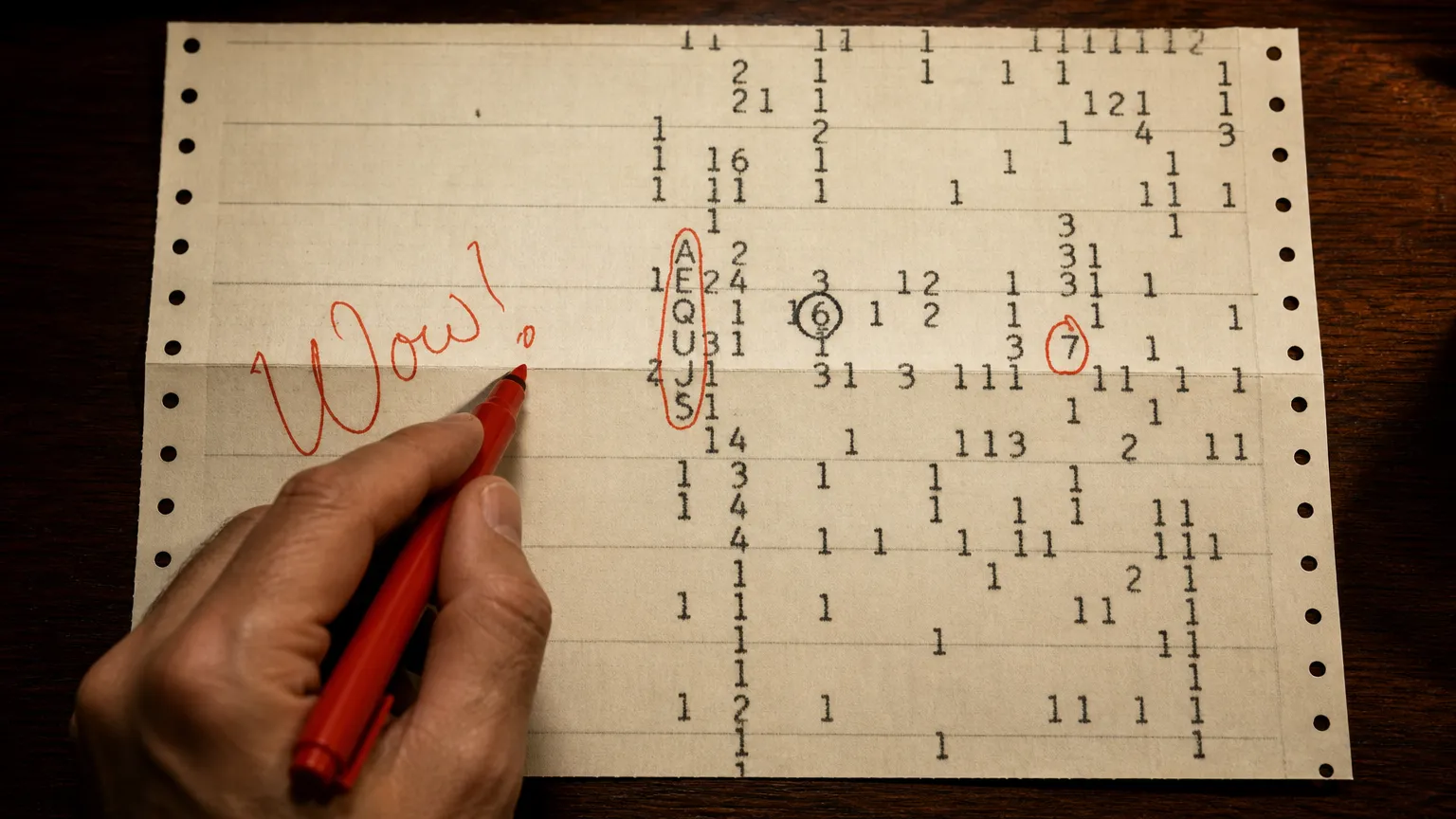
For other documents and messages that have resisted attempts at decoding, read about the Wow! signal, the shortest and most intriguing message that no cryptographer ever needed to decipher. For a lost script with historical consequences, see Easter Island's rongorongo. And for the medieval alchemical context in which the manuscript may have been produced, see Nicolas Flamel.