The Battle of Los Angeles, 1942: fighting an enemy that didn't exist, or that no one identified
Less than three months after Pearl Harbor, searchlights and anti-aircraft guns filled the sky over Los Angeles. To this day, no one knows for sure what they were shooting at.
- When
- February 25, 1942
- Where
- Los Angeles, California, United States
- Status
- Partly explained the main explanation is accepted; details remain open
By The Echoes of the Past team. Published November 2, 2026. 5 min read.
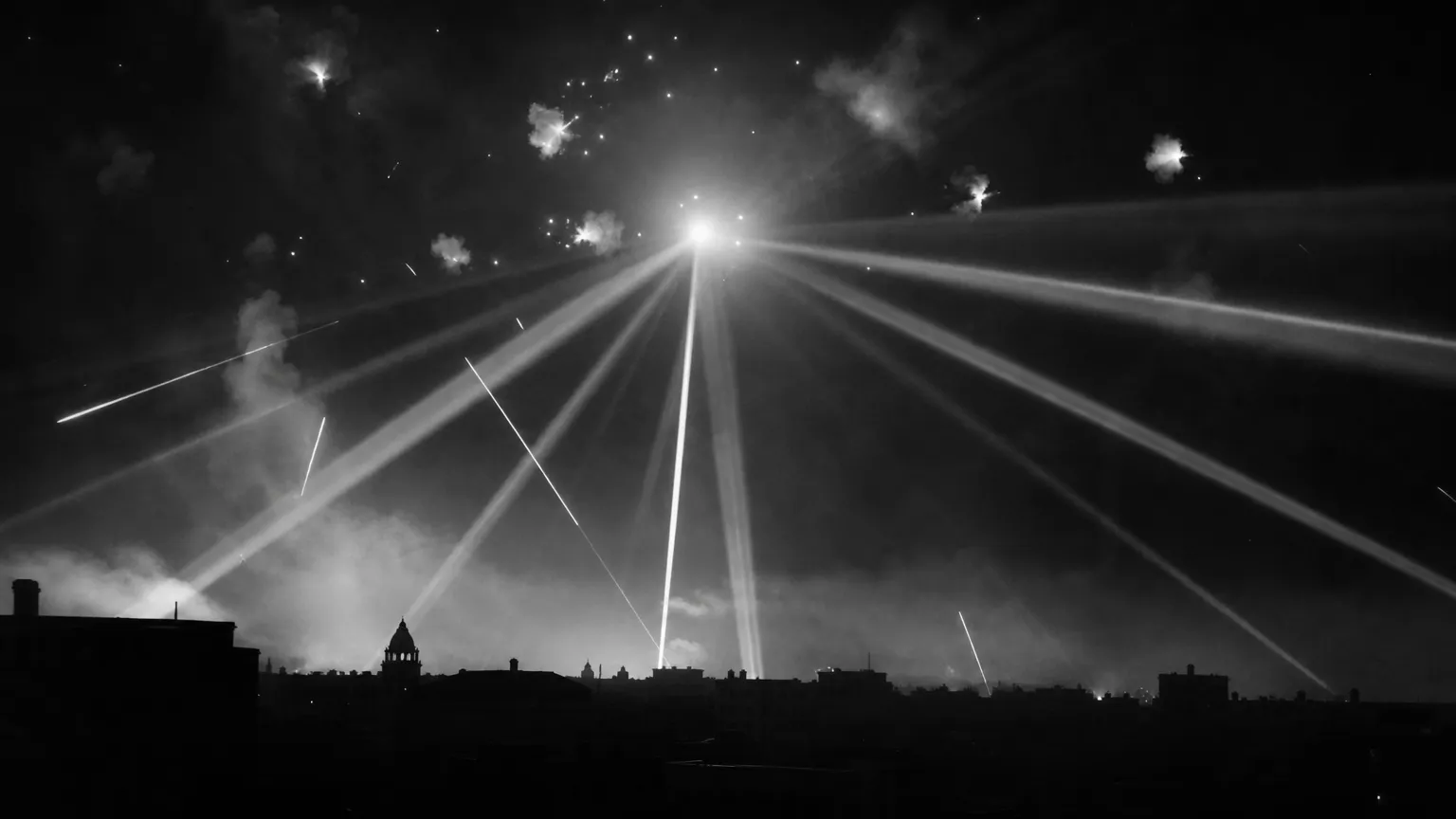
At 2:25 a.m. on February 25, 1942, air raid sirens sounded across Los Angeles. Shortly afterward, the US Army's anti-aircraft command opened fire on targets in the sky over the city.
Over the next two hours, more than 1,400 anti-aircraft shells were fired. Military searchlights swept the sky. The city was put under a total blackout. Sirens wailed. Civilians took shelter in basements.
The incident came less than three months after Pearl Harbor. The US West Coast was in a state of justified paranoia about Japanese attacks. A Japanese submarine had attacked oil facilities in Santa Barbara two days earlier.
When the barrage stopped, at 4:14 a.m., the military went to check what they had shot down.
They found nothing. No downed aircraft. No aircraft debris. No crew. No bombs. No evidence of any enemy aircraft over Los Angeles that night.
Five Americans died: three in traffic accidents during the blackout and two of heart attacks. Deaths caused by the American military's own response to an attack that didn't exist, or that no one was able to identify.
The contradictory official versions
The Battle of Los Angeles had the peculiar distinction of receiving two contradictory official versions from the US government itself, just hours apart.
Version of Secretary of War Henry Stimson (morning of February 25): the barrage was a response to real aircraft flying over Los Angeles. Between one and five aircraft, of unidentified origin, had been sighted.
Version of Secretary of the Navy Frank Knox (same morning): the incident was a "false alarm" caused by "war nerves." No aircraft had flown over Los Angeles.
Two cabinet members, on the same day, with completely opposite versions of the same event. The official opacity that followed MH370, when the Malaysian government took weeks to release the satellite data that defined the search, shows that this pattern of poor communication in moments of crisis is not unique to 1942. The US Congress opened an investigation that reached no definitive conclusions.
What the photographic record shows
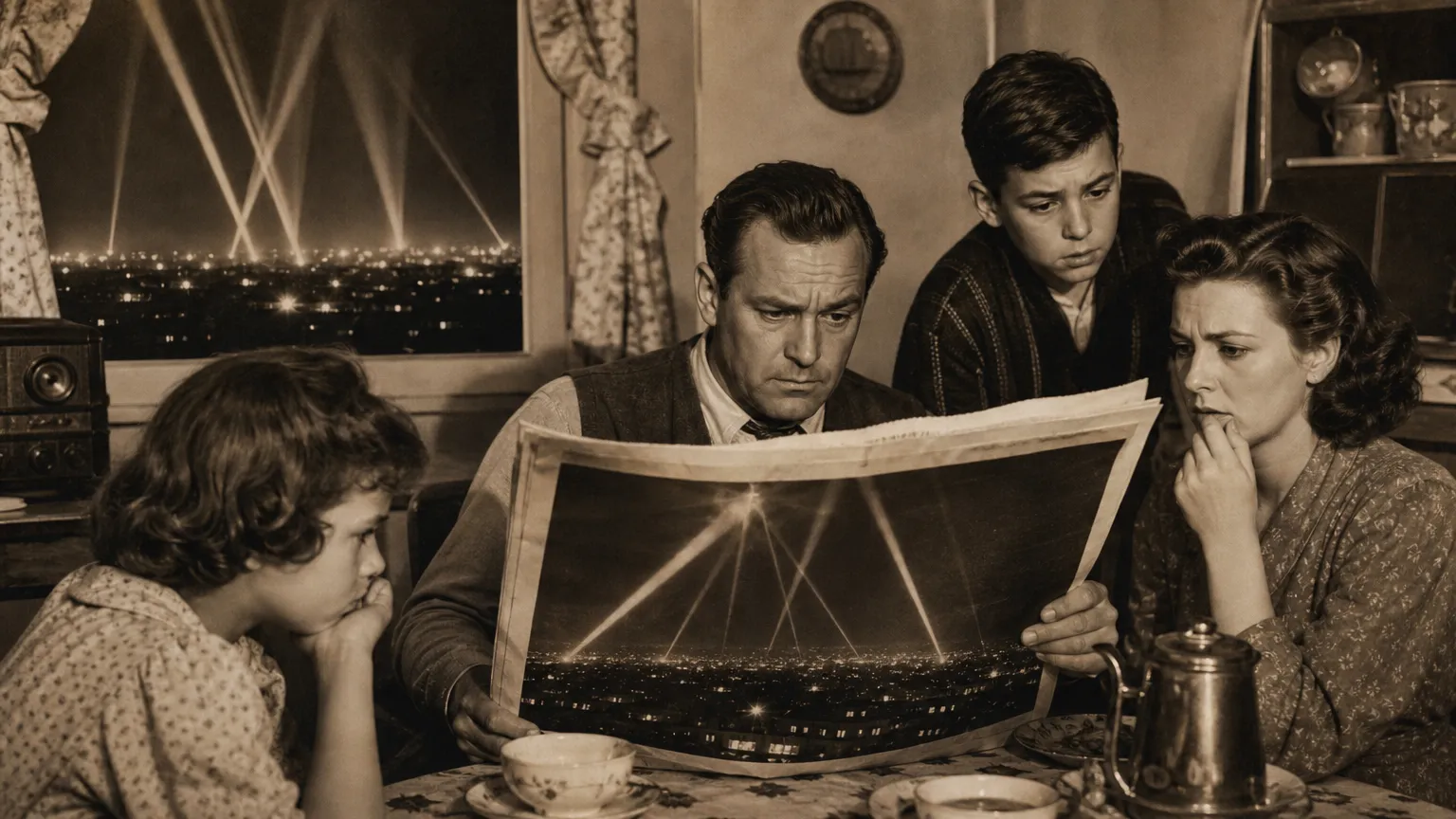
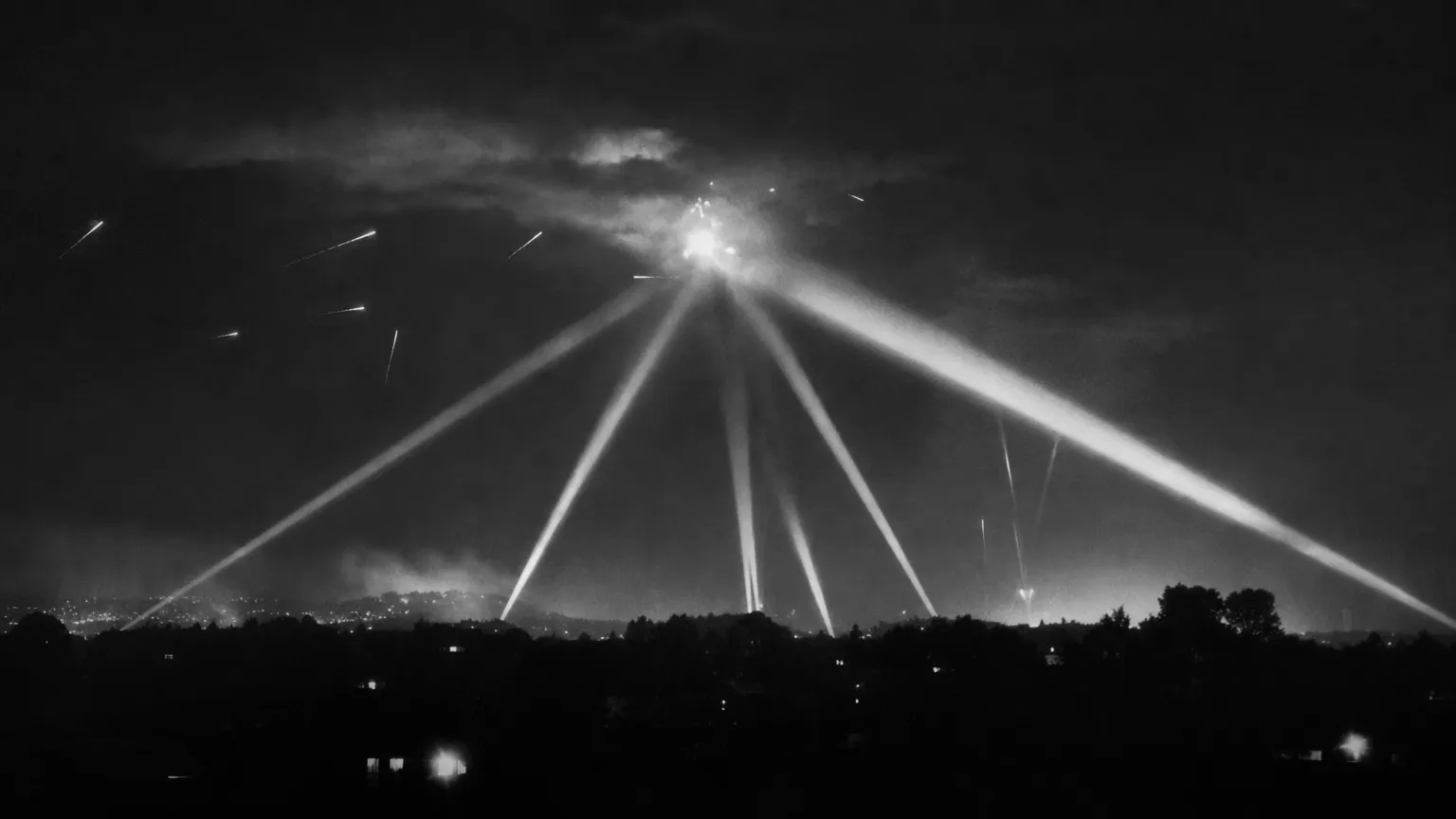
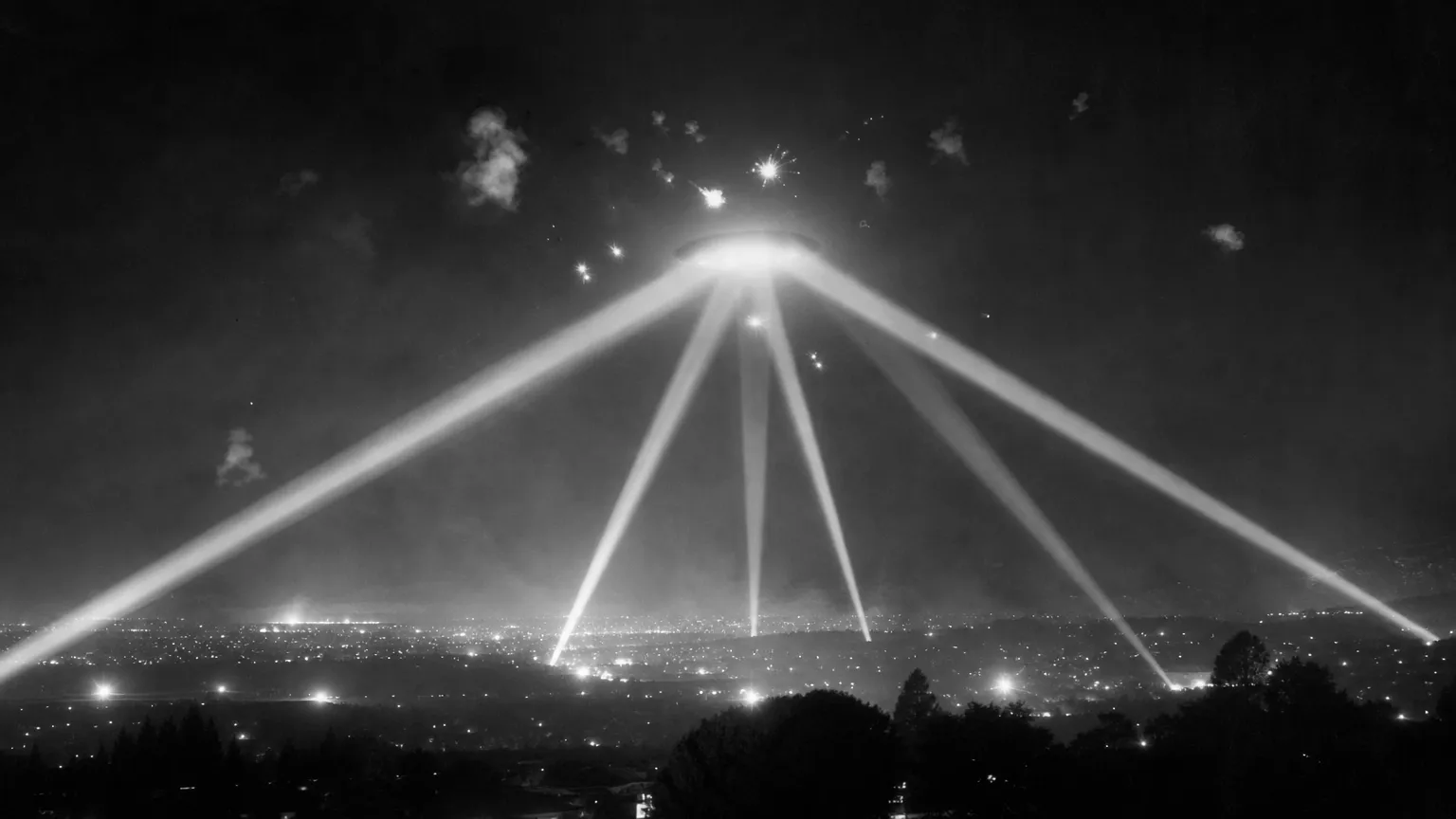
Press photographers covering the event produced an image that became iconic: military searchlights converging on a point in the sky, with anti-aircraft shell trails all around. The object at the center of the searchlights appears as a pale oval shape.
The interpretation of that image is disputed. For some, it is photographic evidence of an aircraft or an unidentified object. For others, it is the result of multiple searchlights converging on a point with no defined target, with the photographic emulsion of the time overexposed.
The photograph settles nothing definitively.
The theories and the historical context
Weather balloon or probe: airborne objects could be mistaken for aircraft in nighttime visibility and under extreme tension. Balloons were used by the US Army and by civilians at the time.
Civilian or experimental aircraft: the California coast had civilian air traffic and experimental prototypes that could have set off alarms among tense radar operators.
Cascading error: in a state of post-Pearl Harbor paranoia, a radar operator reads an ambiguous signal as an enemy aircraft. The alert spreads. Searchlights are switched on. An artillery operator fires at whatever the searchlights illuminate. Others fire at whatever the first one fired at. Within minutes, 1,400 shells had been fired at the collective fear of an attack that, 80 days earlier, had killed 2,403 Americans.
This is the theory most widely accepted by military historians.
UFO: the event features prominently in UFO literature as one of the first modern military records of an encounter with an unidentified object. The US Air Force, in a later analysis carried out for Project Grudge in the 1940s, classified the incident as "war hysteria," without entirely ruling out the presence of an unknown object.
What the event reveals, regardless of what was in the sky
The Battle of Los Angeles is fascinating regardless of the question of what the object (or non-object) in the sky was. The human reaction to the unknown that it reveals shows up in different forms in other contexts: in the Dyatlov Pass incident, trained people abandoned the safety of a tent in lethal conditions in response to something that was never identified; in the Dancing Plague of 1518, an entire city lost control in response to a stimulus that medicine still cannot explain.
The episode shows how collective fear can turn ambiguity into certainty. Highly trained radar operators, gunners and military commanders, on maximum alert, fired 1,400 shells at something no one could definitively identify.
It shows how contradictory versions of events can coexist officially without resolution. The contradiction between Stimson and Knox was never reconciled in any public statement.
And it shows that the line between "an event that happened" and "an event that seems to have happened" can be thinner than our cognitive categories allow, especially in conditions of fear, darkness and war.
The sky over Los Angeles kept its secret that night. And the US military archives, which could settle the question once and for all, revealed nothing conclusive in the decades that followed.
For other events in which collective perception and reality became hard to separate, read about the Dancing Plague of 1518, where collective behavior was just as disturbing, and the Dyatlov Pass incident. For the context of what the United States did with classified information in that period, see Nikola Tesla and the papers seized by the FBI. For other mysteries of the sky that no one has been able to explain, see the Wow! signal and the Fermi paradox.